
Bikini Trim: A Guide to Trim Details for Custom Swimwear
A bikini does not always need a complicated construction to stand out. Sometimes, the right trim can completely change the look of a simple silhouette.
From soft ruffles and bows to metal rings, beads, chains and contrast piping, bikini trims can add femininity, structure, texture or a distinctive brand identity.
For swimwear brands developing new collections, however, trim is not only about appearance. Placement, material, attachment method and wearing comfort all need to be considered during development.
What Is Bikini Trim?
Bikini trim refers to decorative details or finishing elements added to a bikini top or bottom.
Common examples include:
Ruffles
Bows
Piping
Contrast binding
Beads
Shell details
Metal rings
Chains
Decorative straps
Lace or mesh inserts
Logo hardware
Decorative stitchingThe same bikini silhouette can look completely different simply by changing the trim.
Popular Types of Bikini Trim

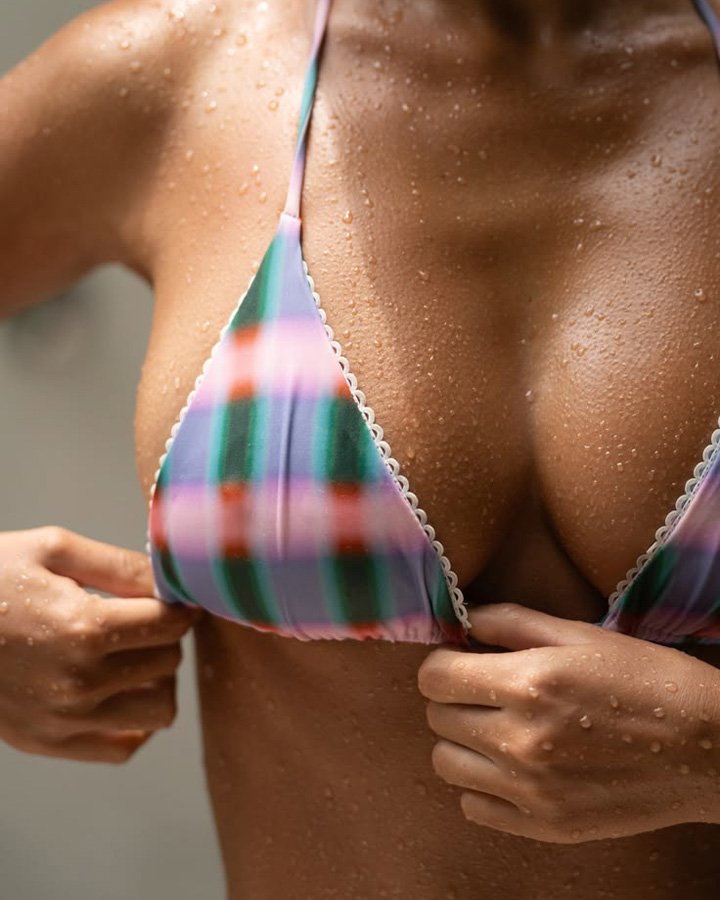
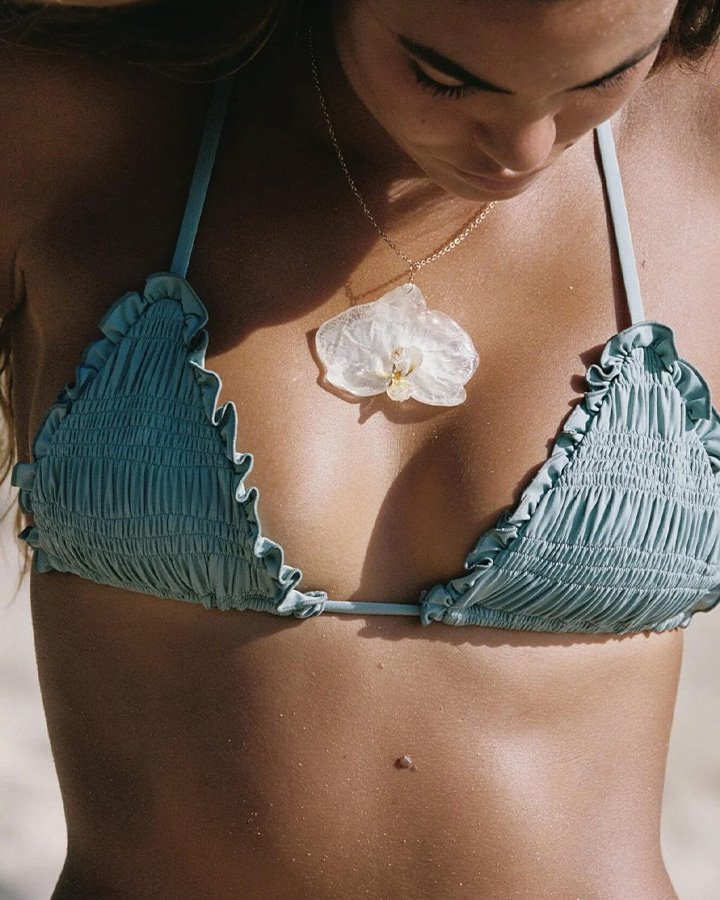
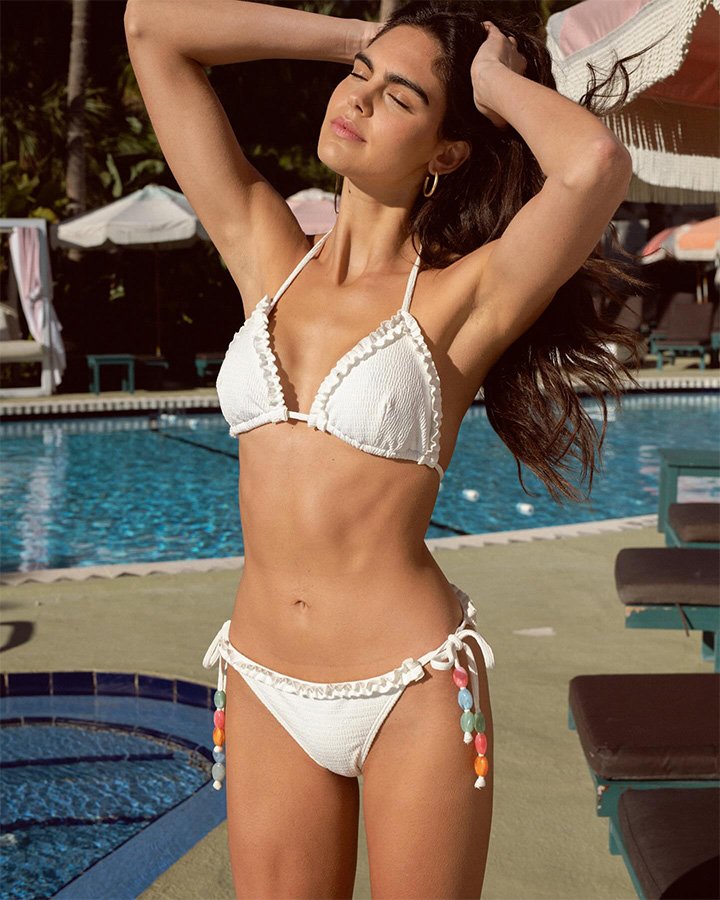
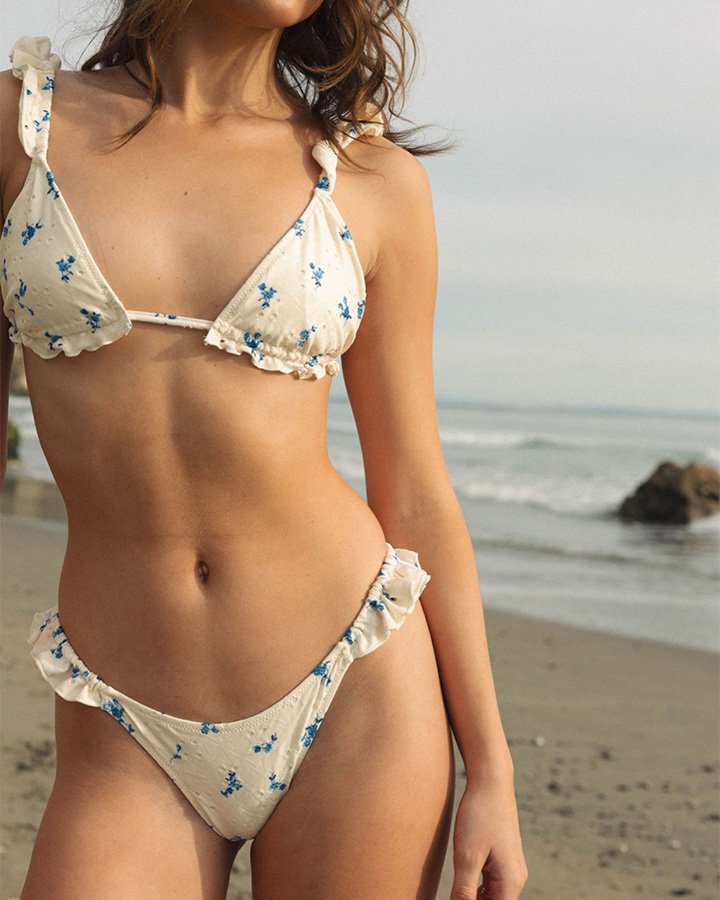
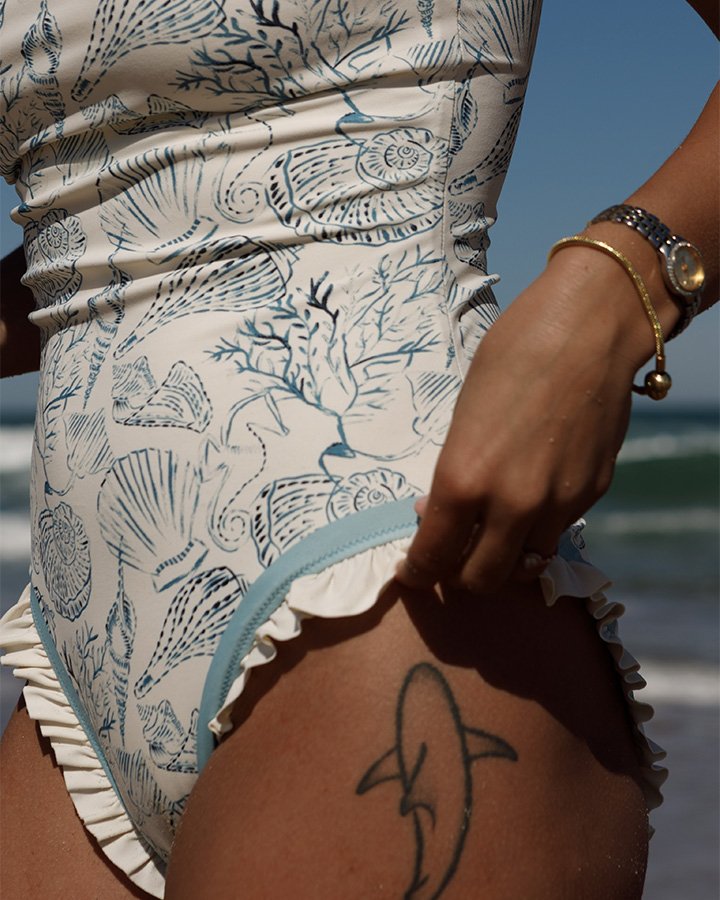


Ruffles are commonly used around bikini edges, straps, waistbands or neckline areas.
They create a soft, feminine and playful look, making them suitable for romantic, vacation and young women’s swimwear collections.
However, ruffles also increase sewing complexity. The amount of gathering, fabric weight and attachment method can affect the final appearance.
2. Bow Details
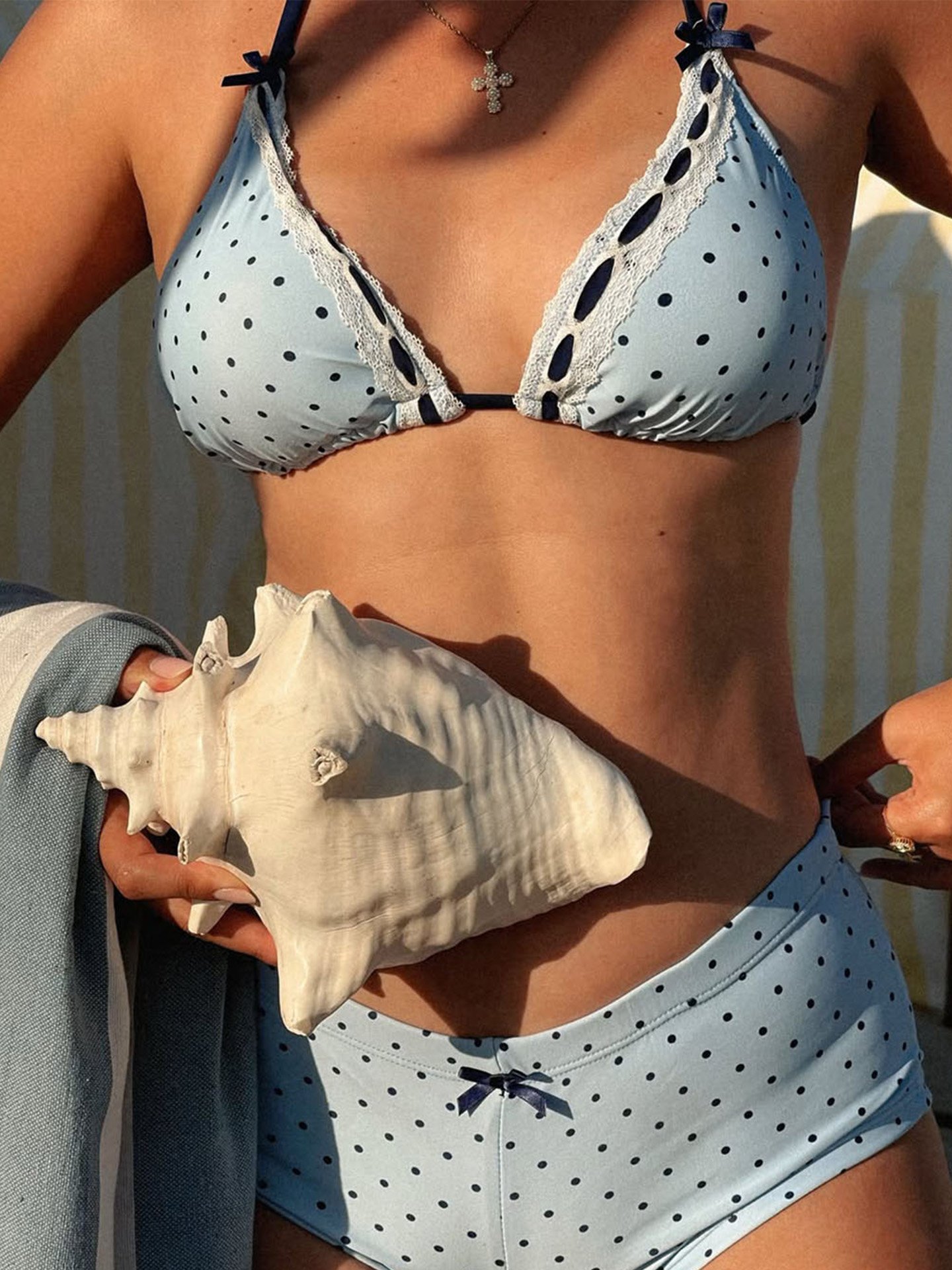
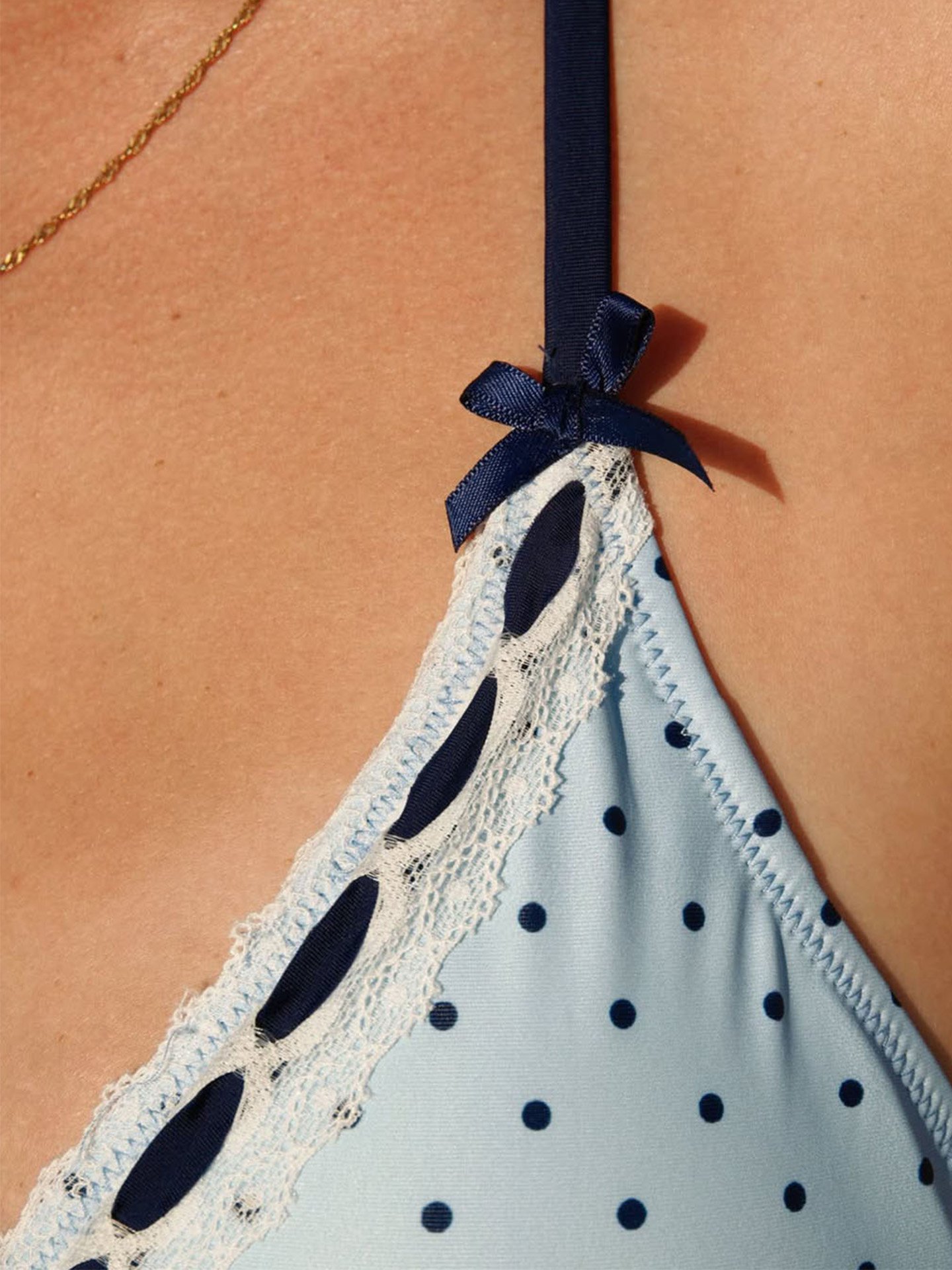


Bows can be added to bikini tops, center fronts, side seams or shoulder straps.
A small bow can create a subtle decorative effect, while an oversized bow becomes a major design feature.3. Piping & Contrast Trim
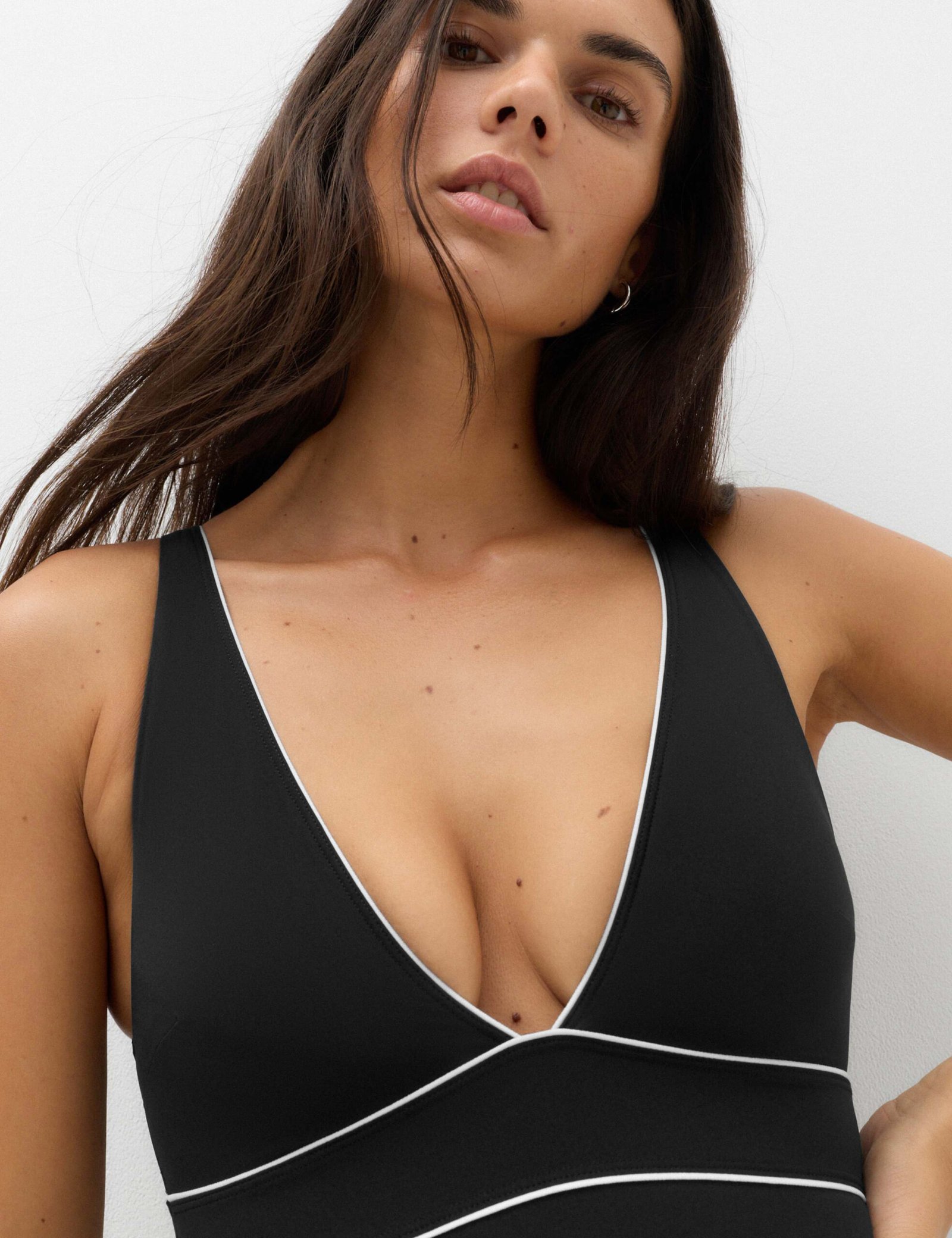
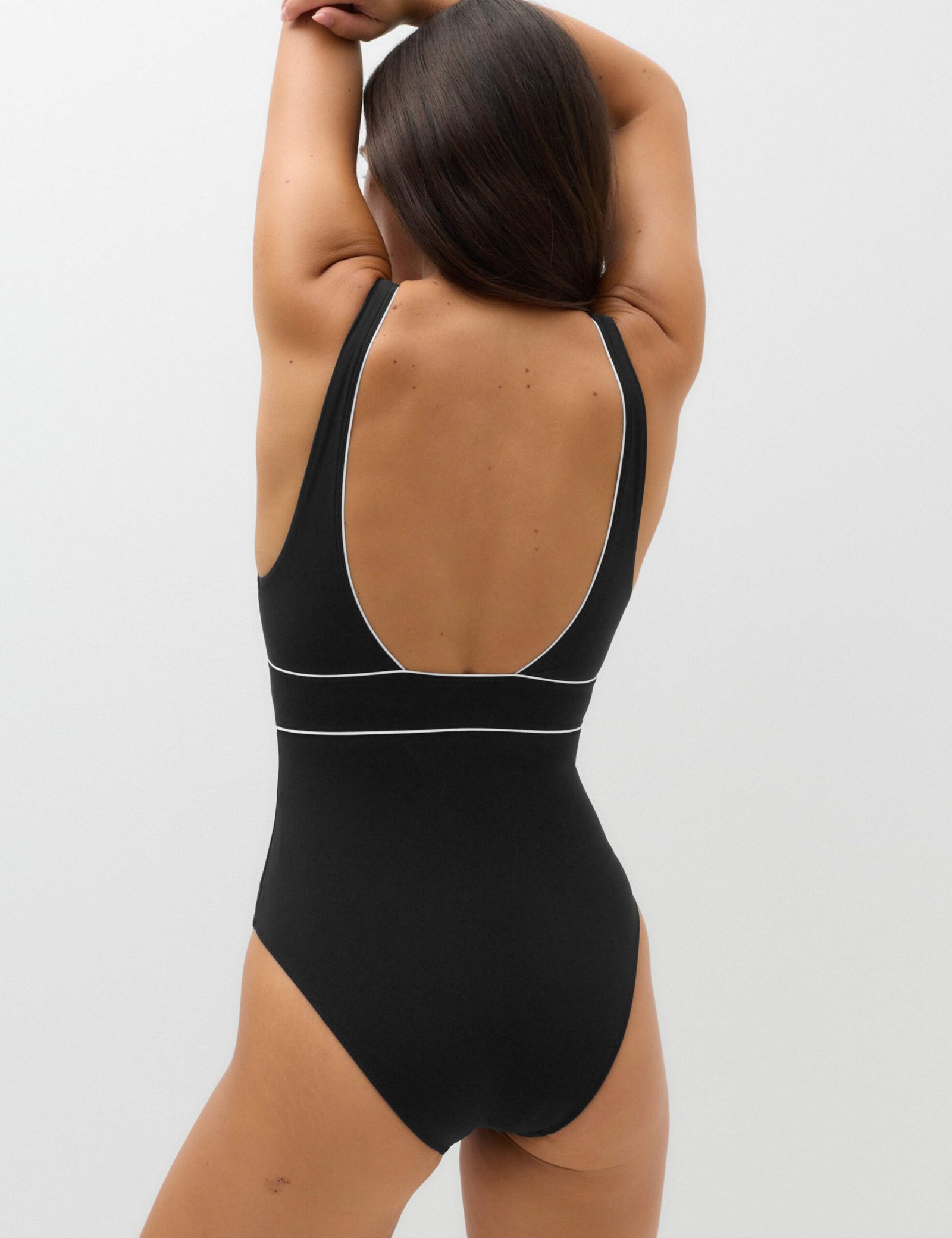
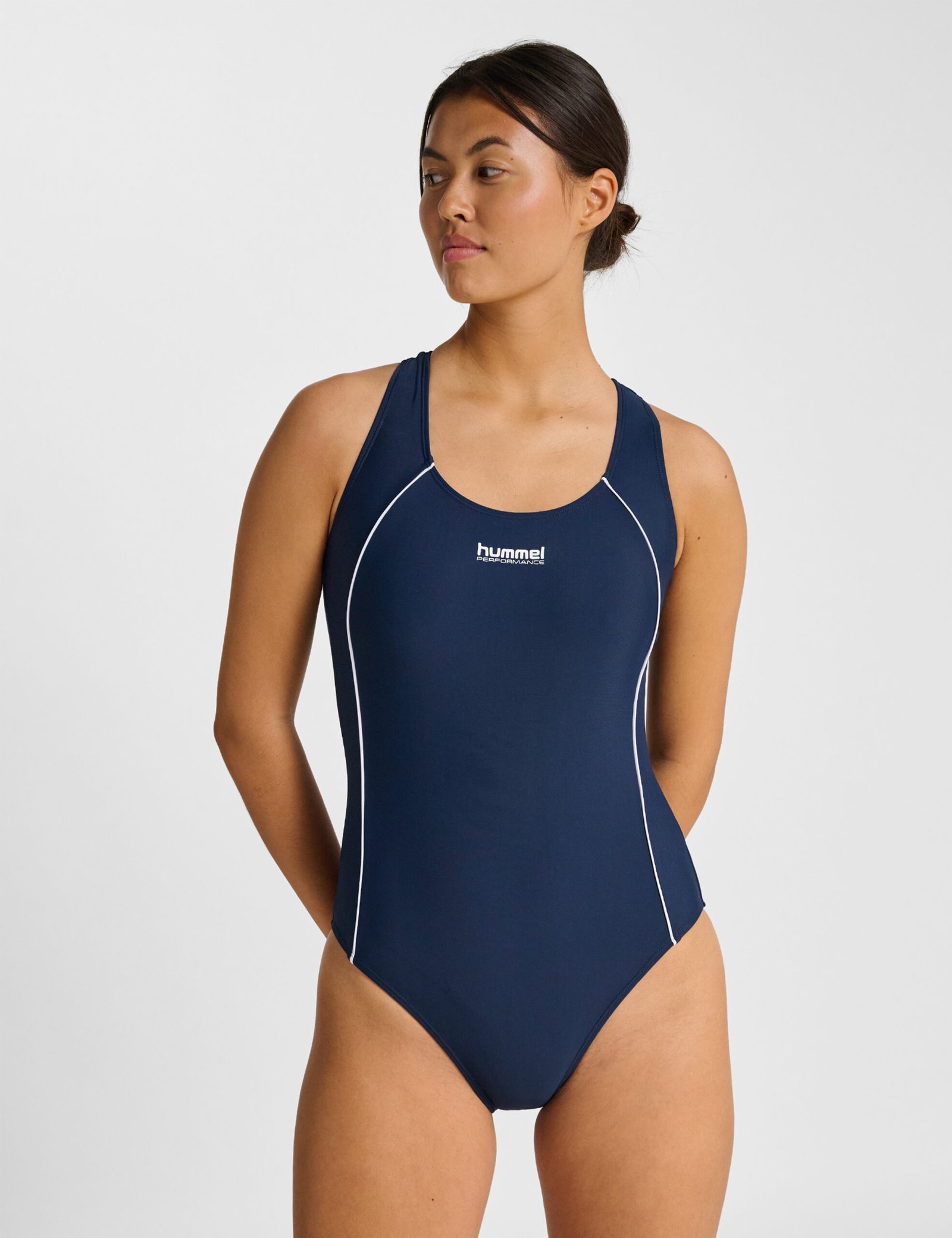
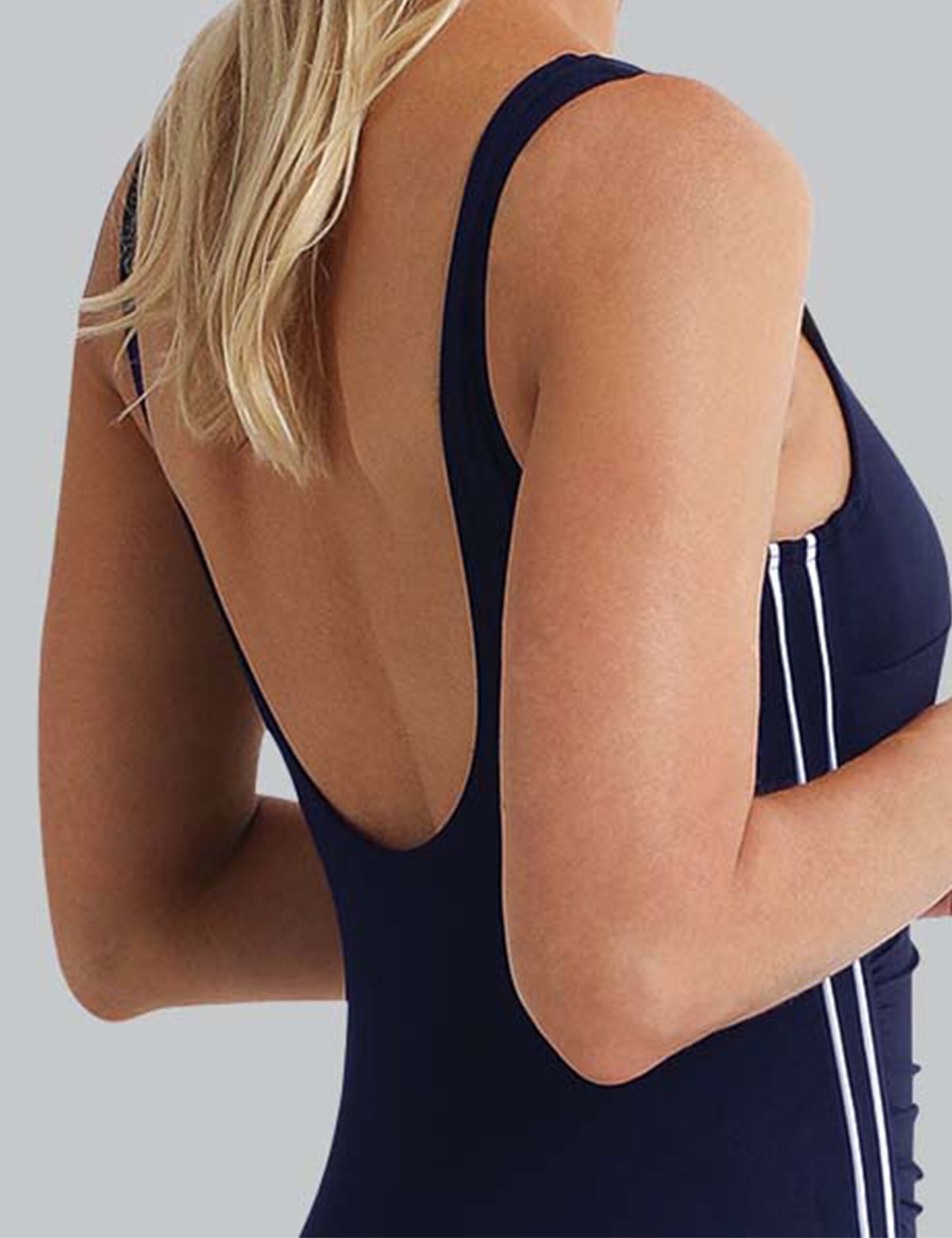
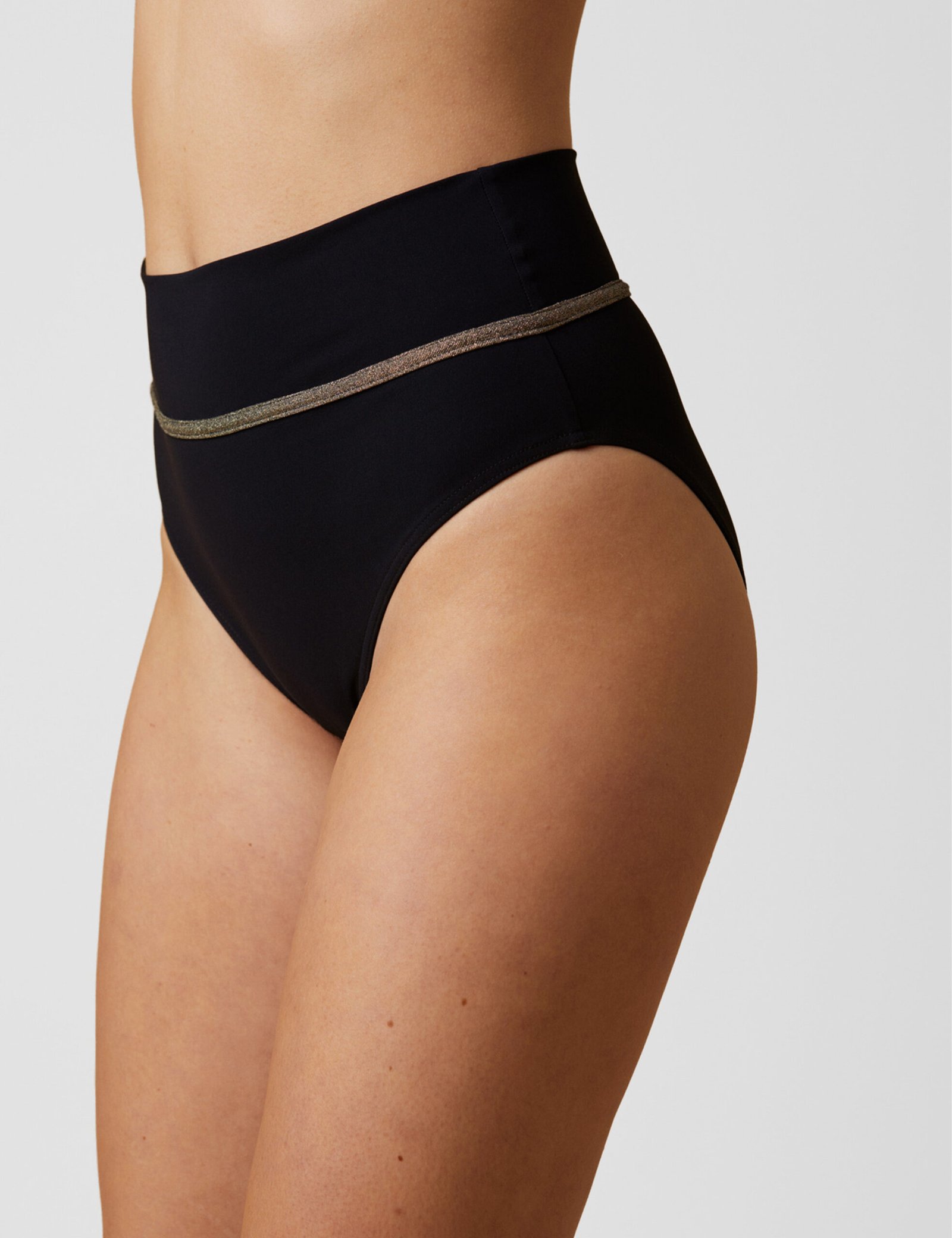
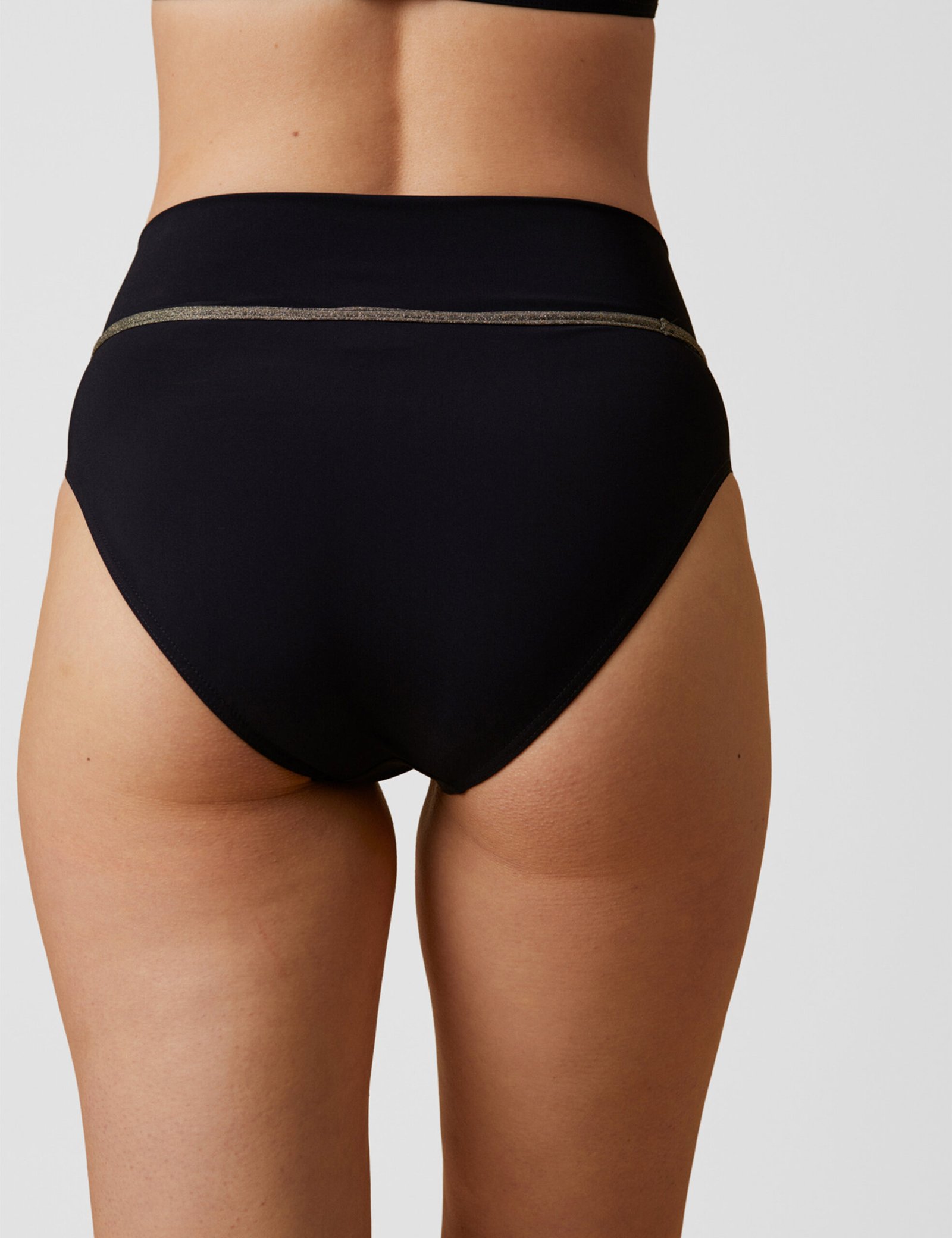

Piping is one of the most practical ways to add visual definition to a bikini.
A contrasting color can emphasize:
Necklines
Leg openings
Waistlines
Cup shapes
Seam linesFor example, black piping on a cream bikini can create a clean, structured appearance without adding bulky accessories.
Piping can also help highlight the construction of the garment rather than simply decorating it.
4. Metal Rings & Hardware
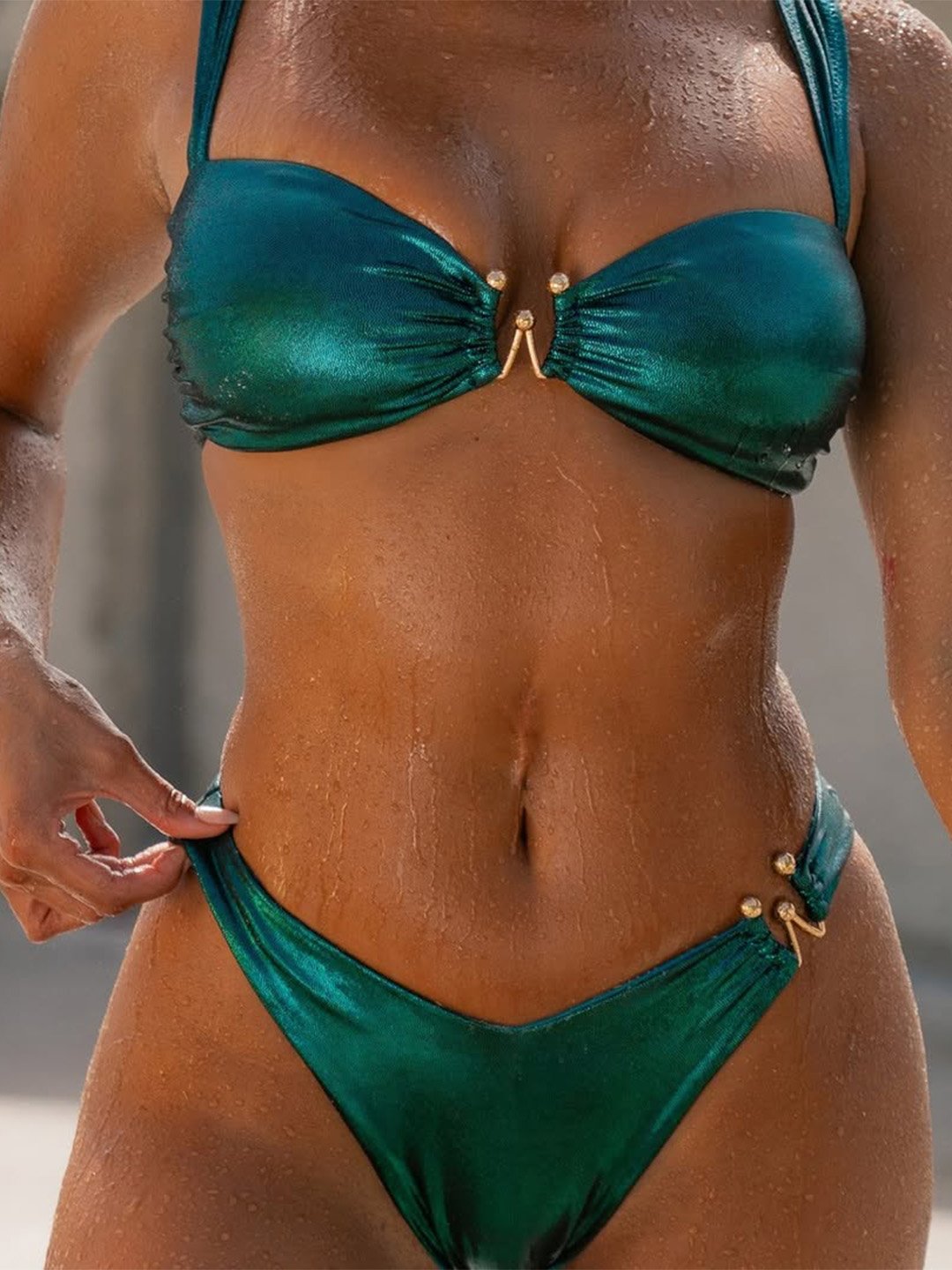
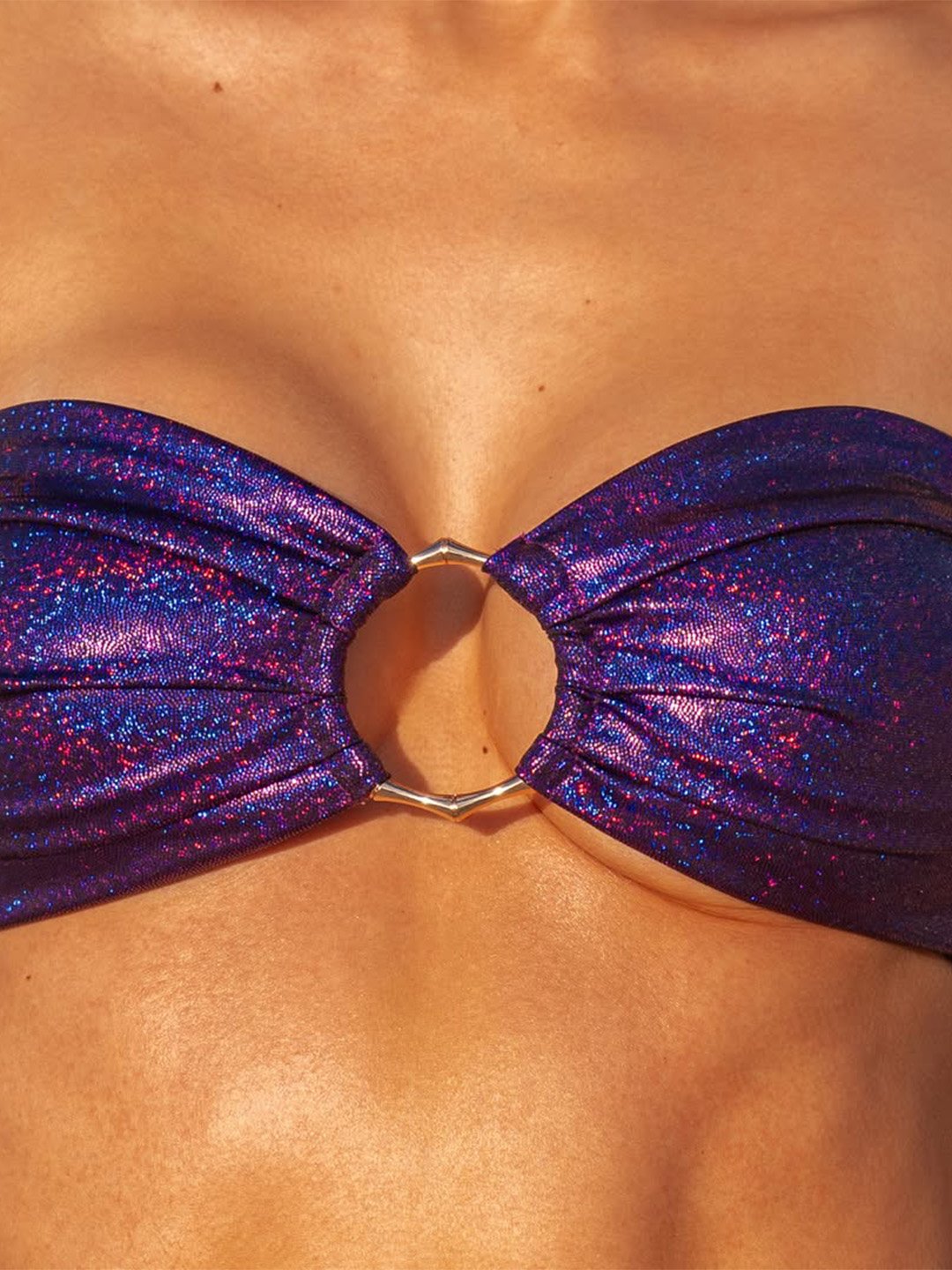


Metal rings, sliders and decorative hardware are frequently used on bikini straps and side details.
They can make a simple bikini feel more sophisticated and premium.
However, hardware selection should consider more than appearance. The size, weight, material, surface finish and connection method can all affect the finished garment.For swimwear, hardware also needs to be suitable for exposure to water, salt, chlorine and sunscreen.
Best for: premium, resort, luxury and fashion-led swimwear.
5. Beads & Charms
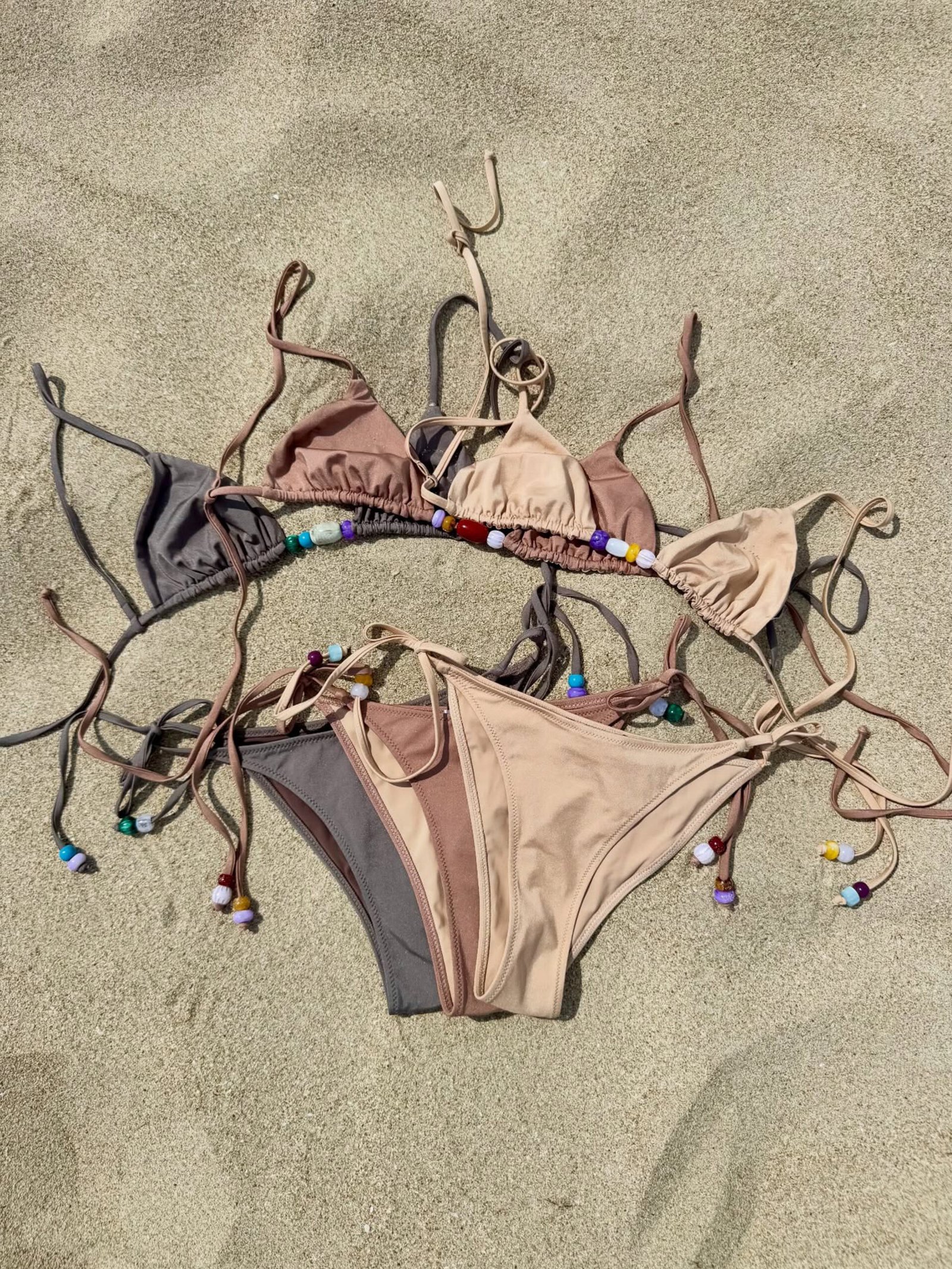
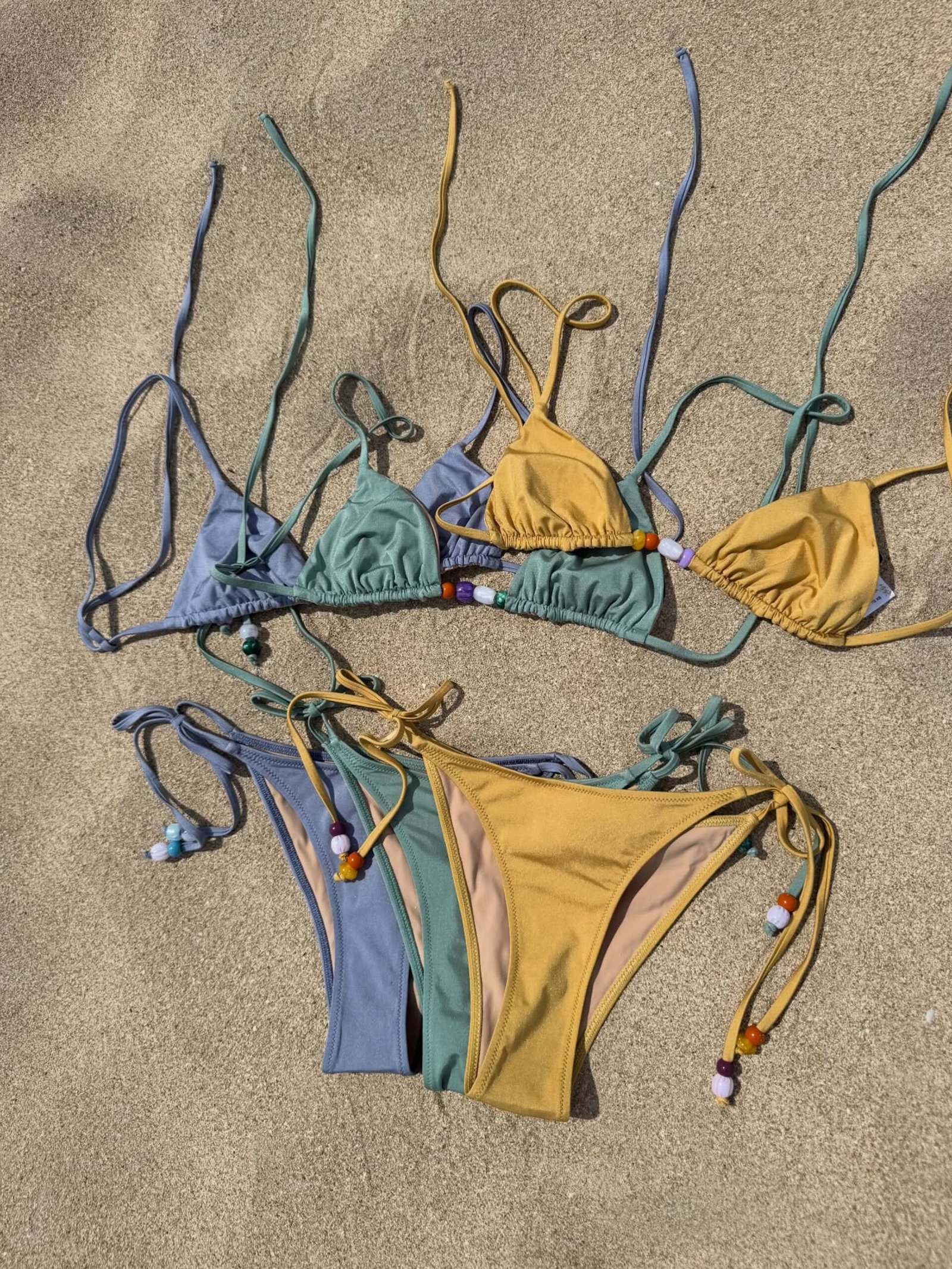
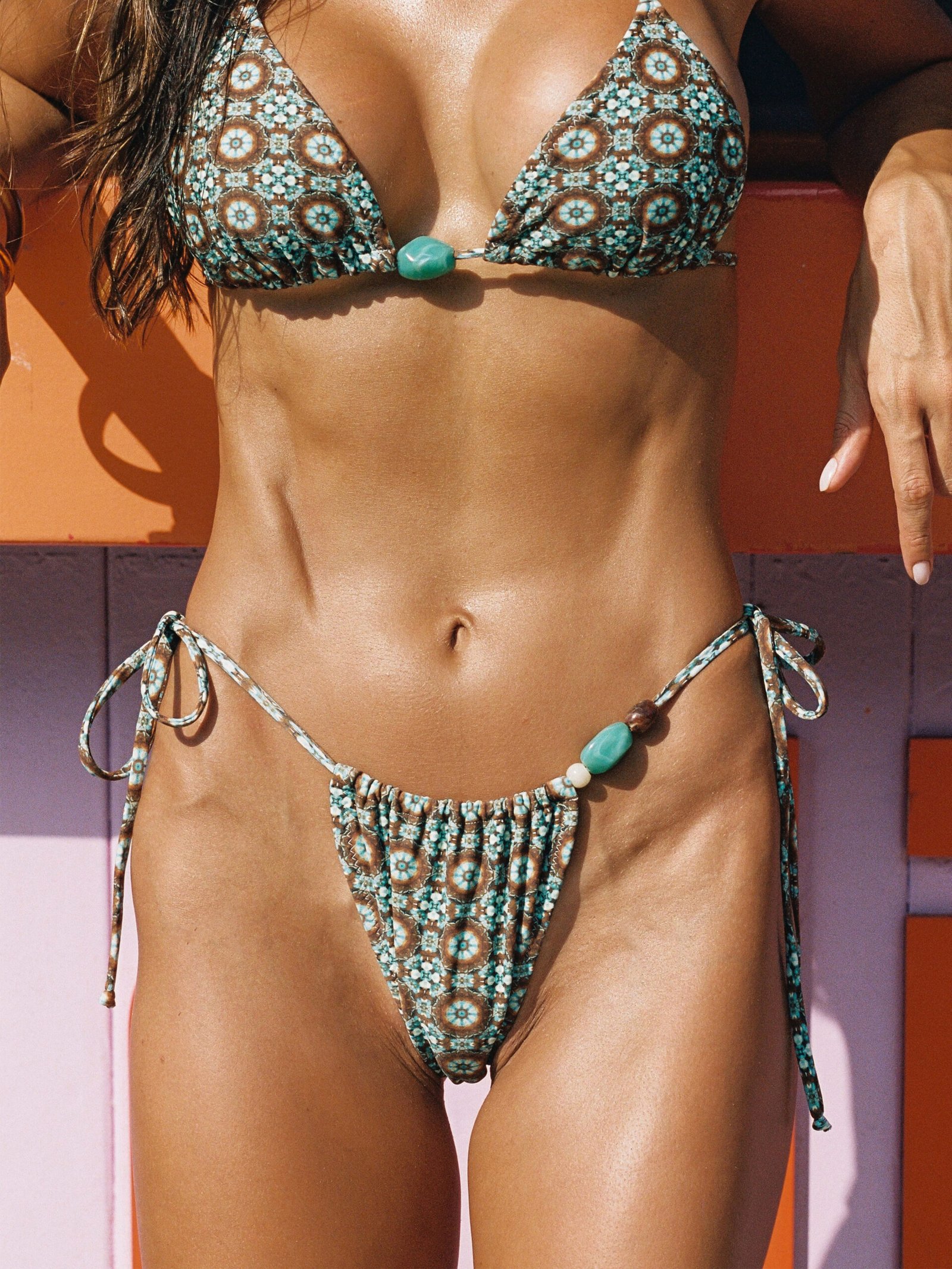
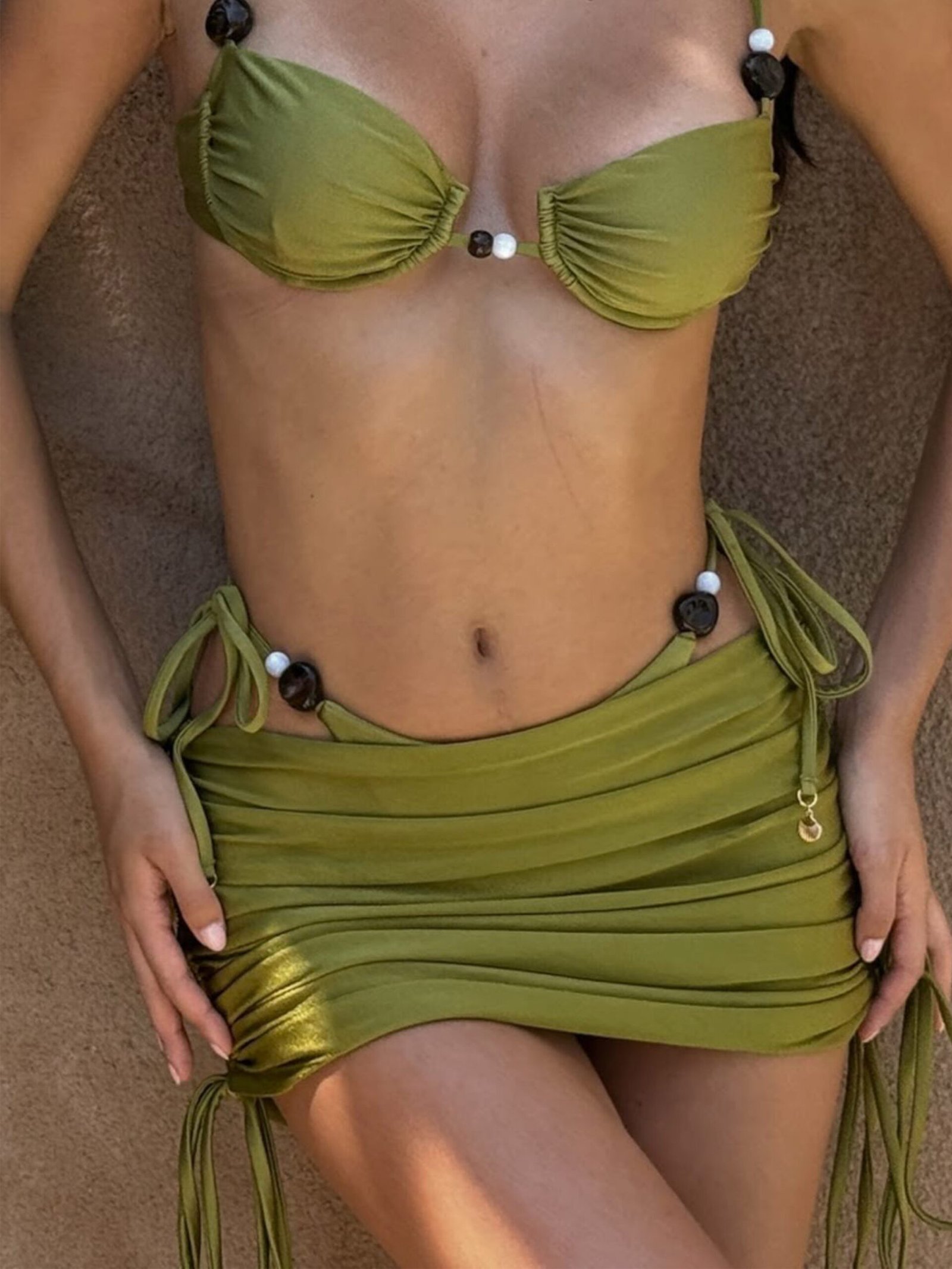

Beads, pearls, shells and small charms can create a distinctive decorative effect.
They work particularly well for vacation, tropical and resort-inspired collections.
But small decorative elements can move during wear, so the attachment method is important.The design should also avoid creating uncomfortable pressure points against the body.
- Feminine swimwear
- Romantic aesthetics
- Resortwear
- Vacation lifestyles
- Playful and youthful fashion
- Fashion-forward statement swimwear
- Professional performance swimwear
- Highly minimalist aesthetics
- Technical sportswear
- Compression-focused swimwear
6. Decorative Chains
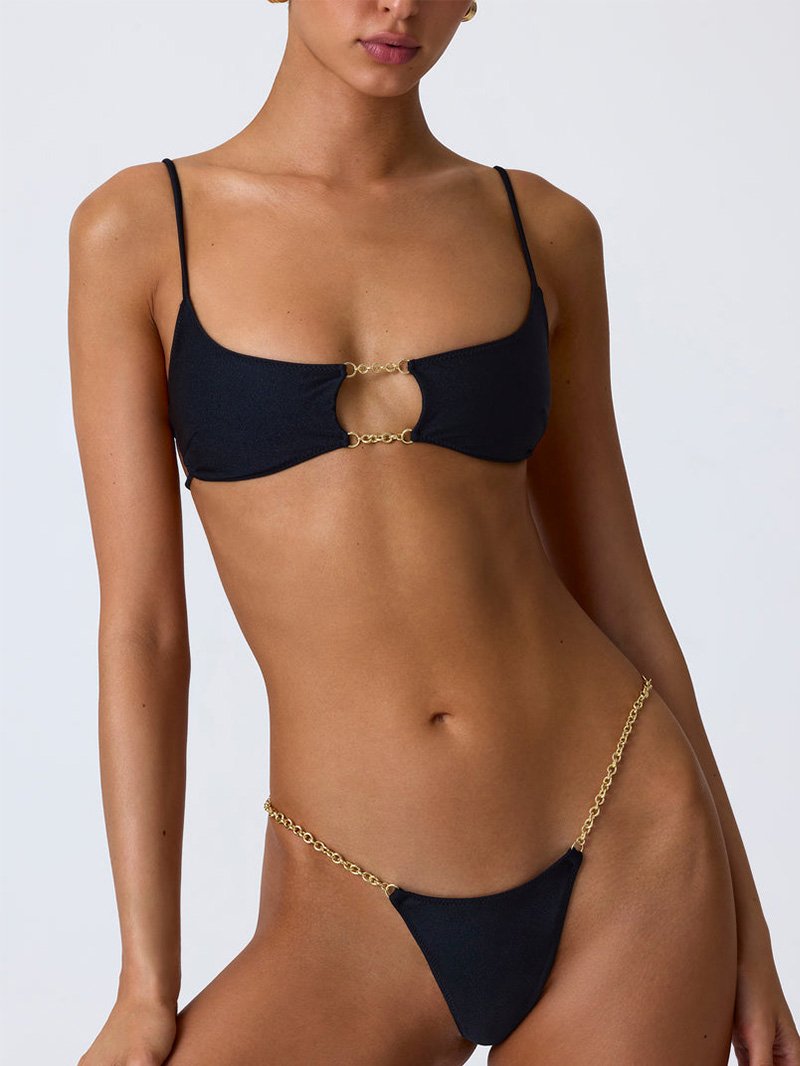
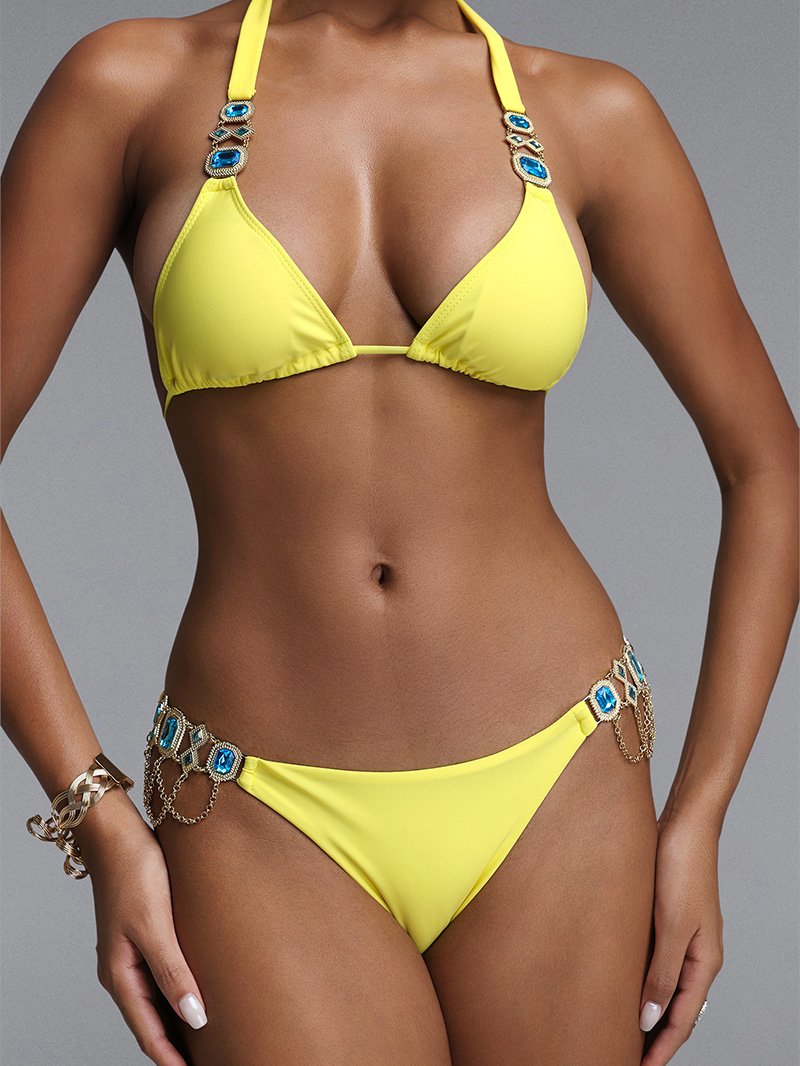
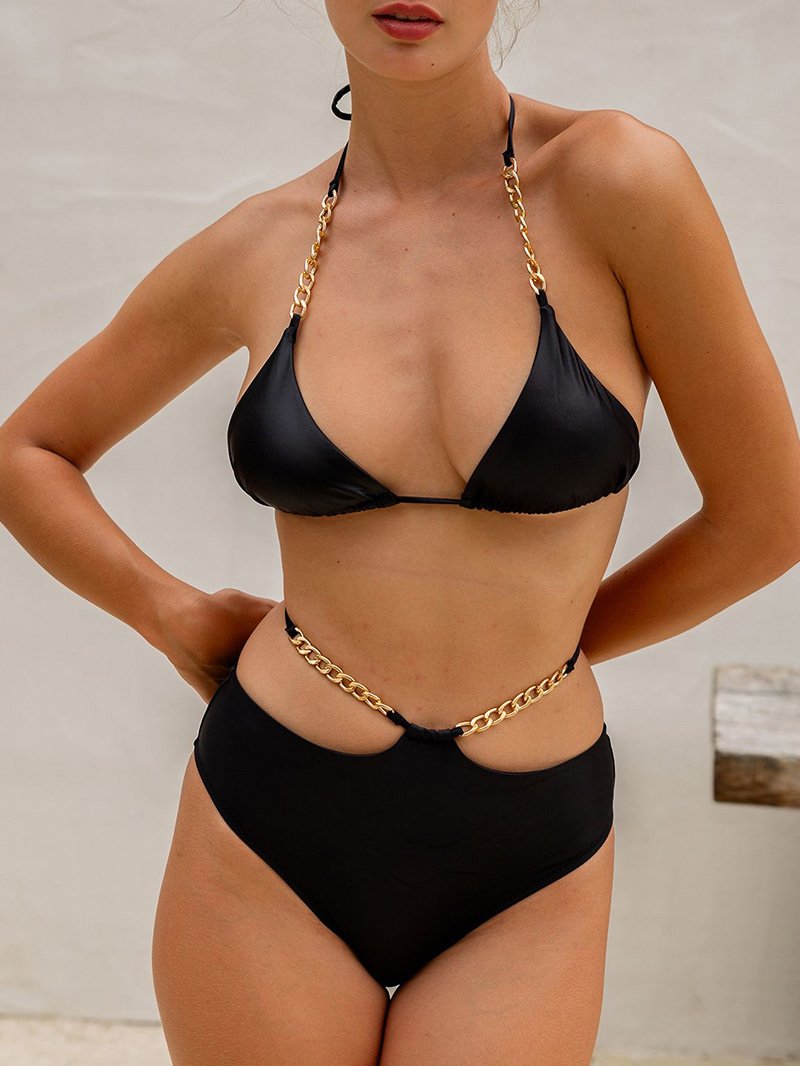
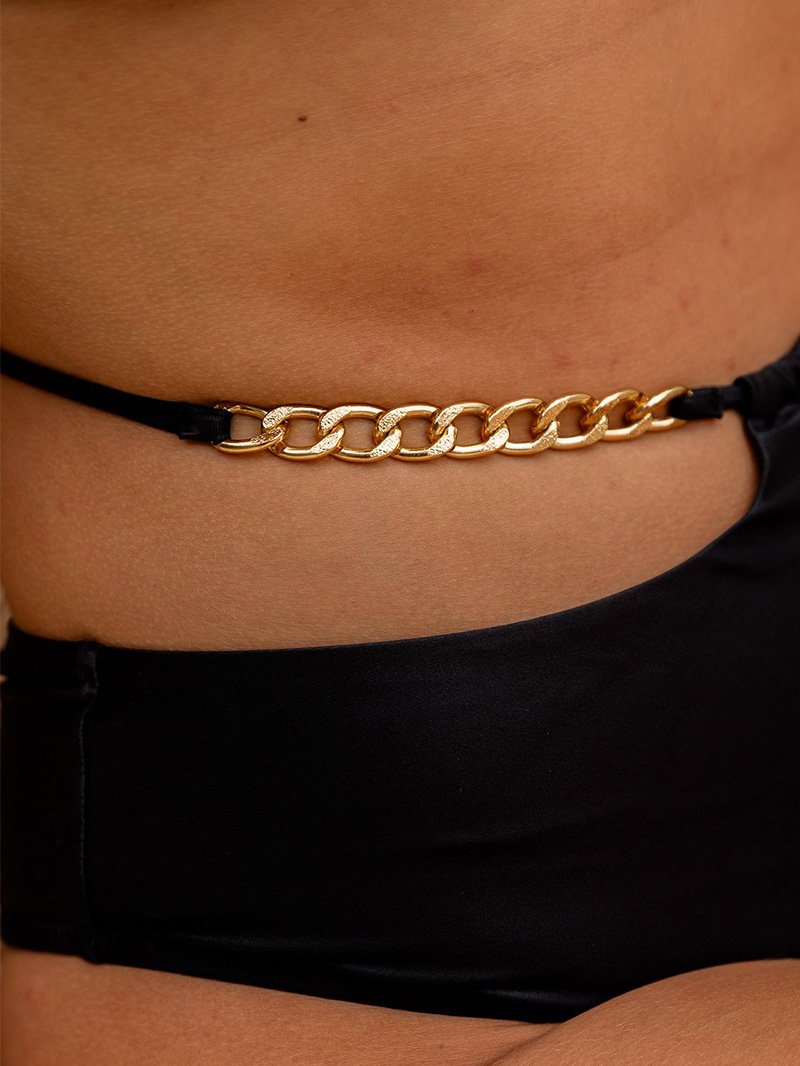
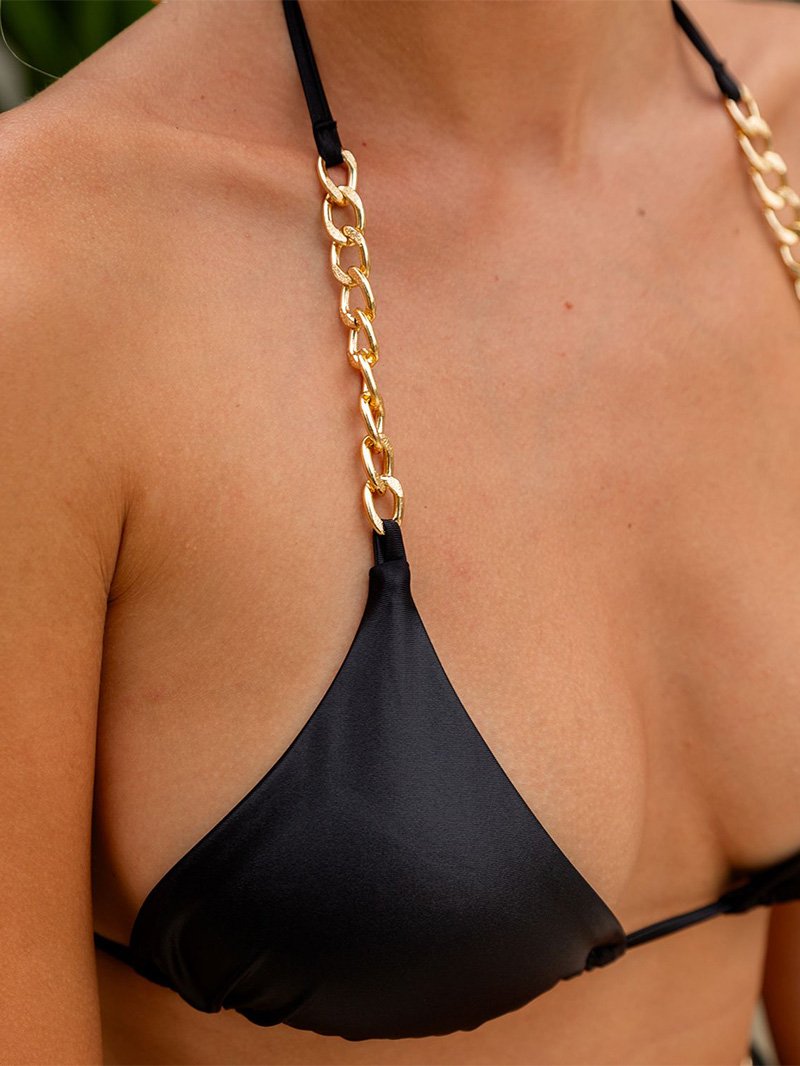
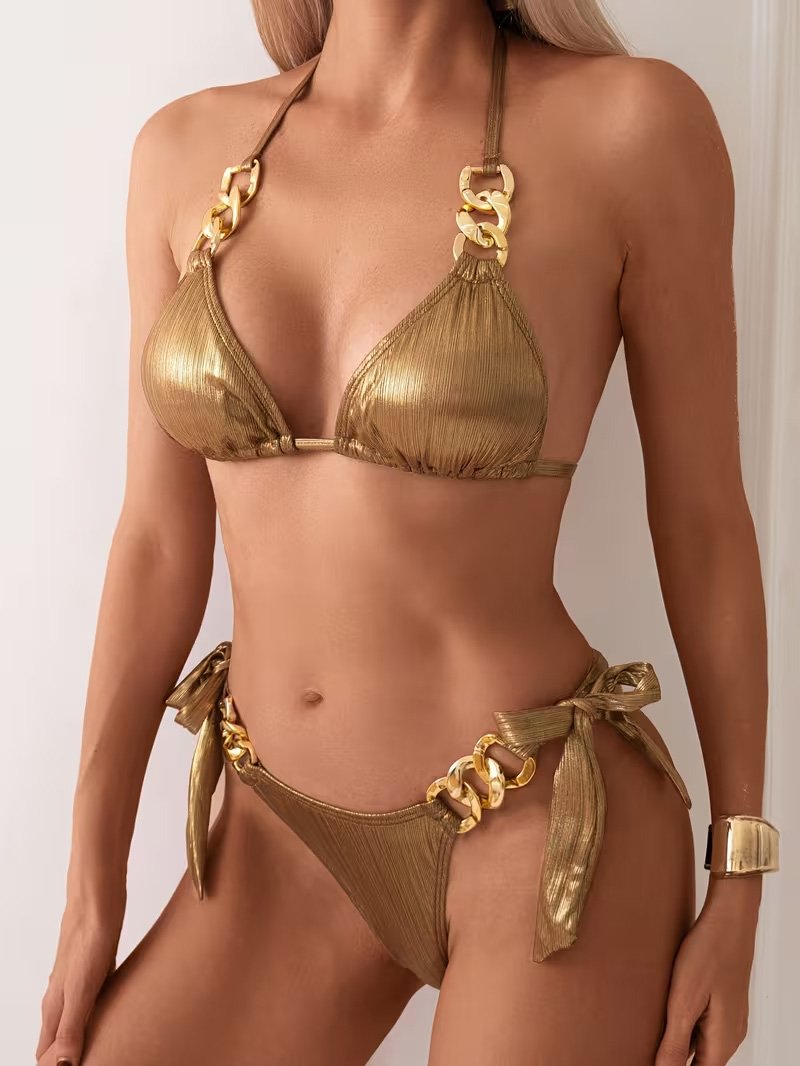
Chains can be used as strap details, side decorations or connecting elements.
They can give a bikini a more edgy, glamorous or jewelry-inspired appearance.
For production, chain weight and attachment points should be considered carefully. A heavy chain can pull on lightweight swimwear fabric and change the fit or drape.
Best for: fashion-forward and statement swimwear.
7. Contrast Binding

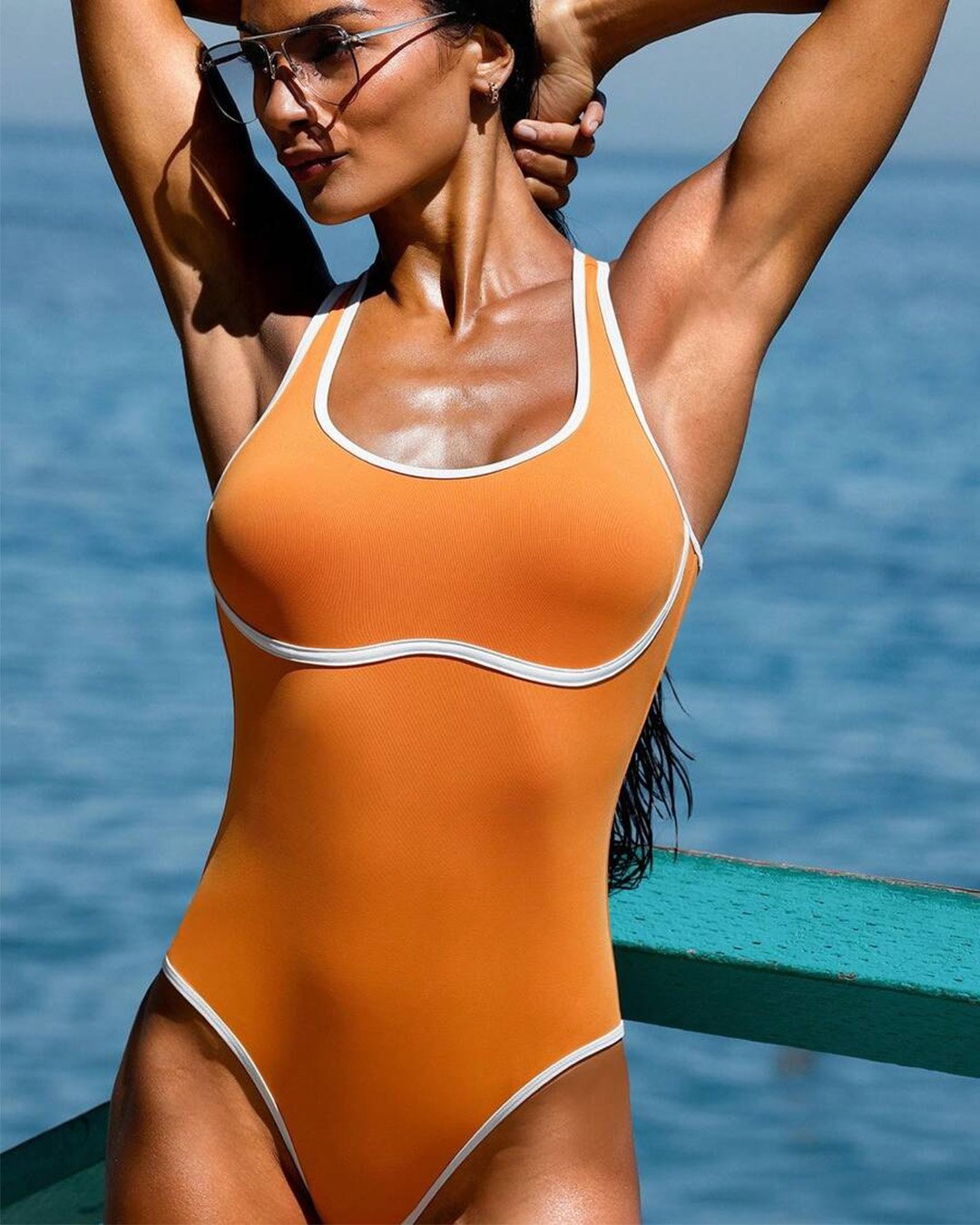
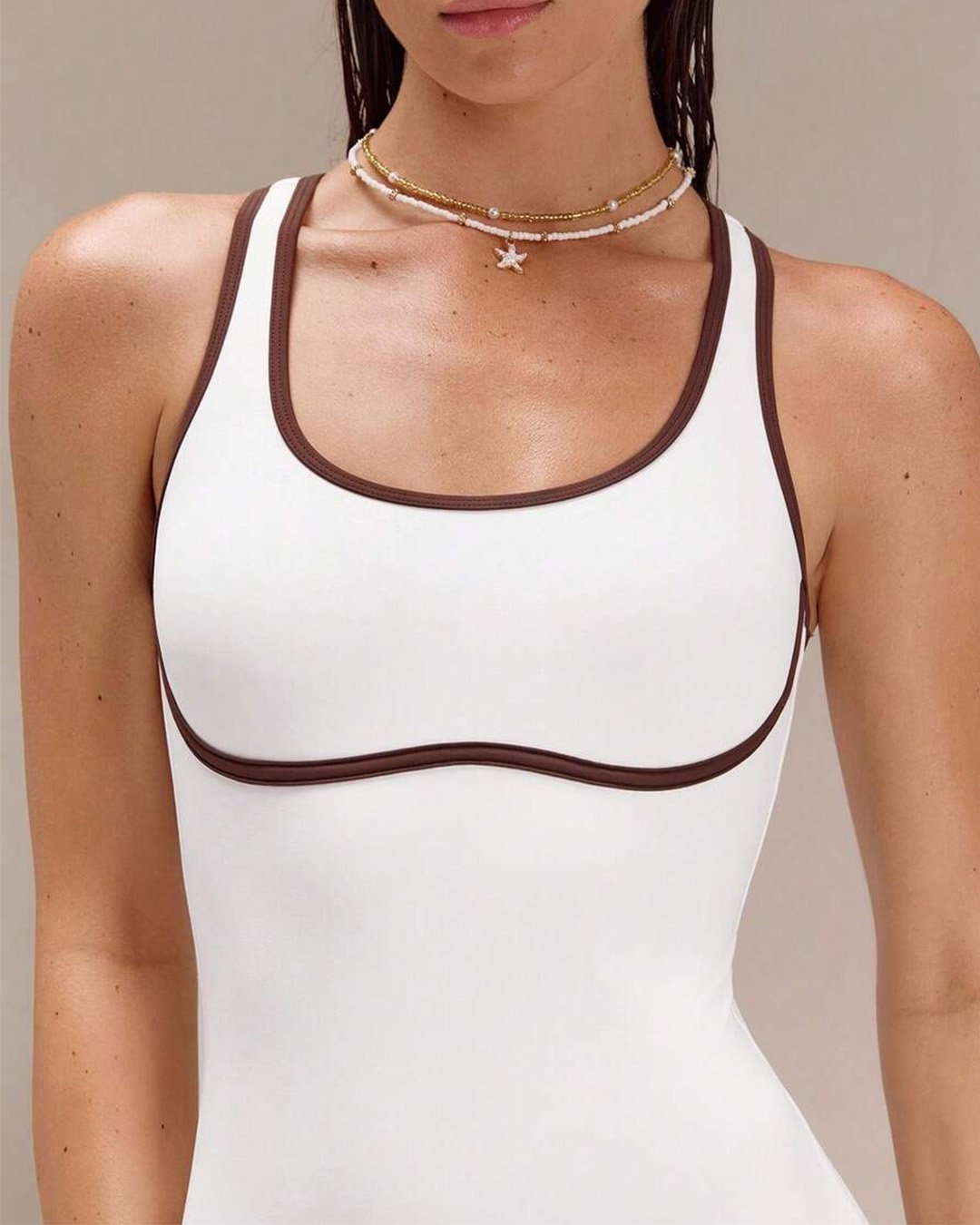

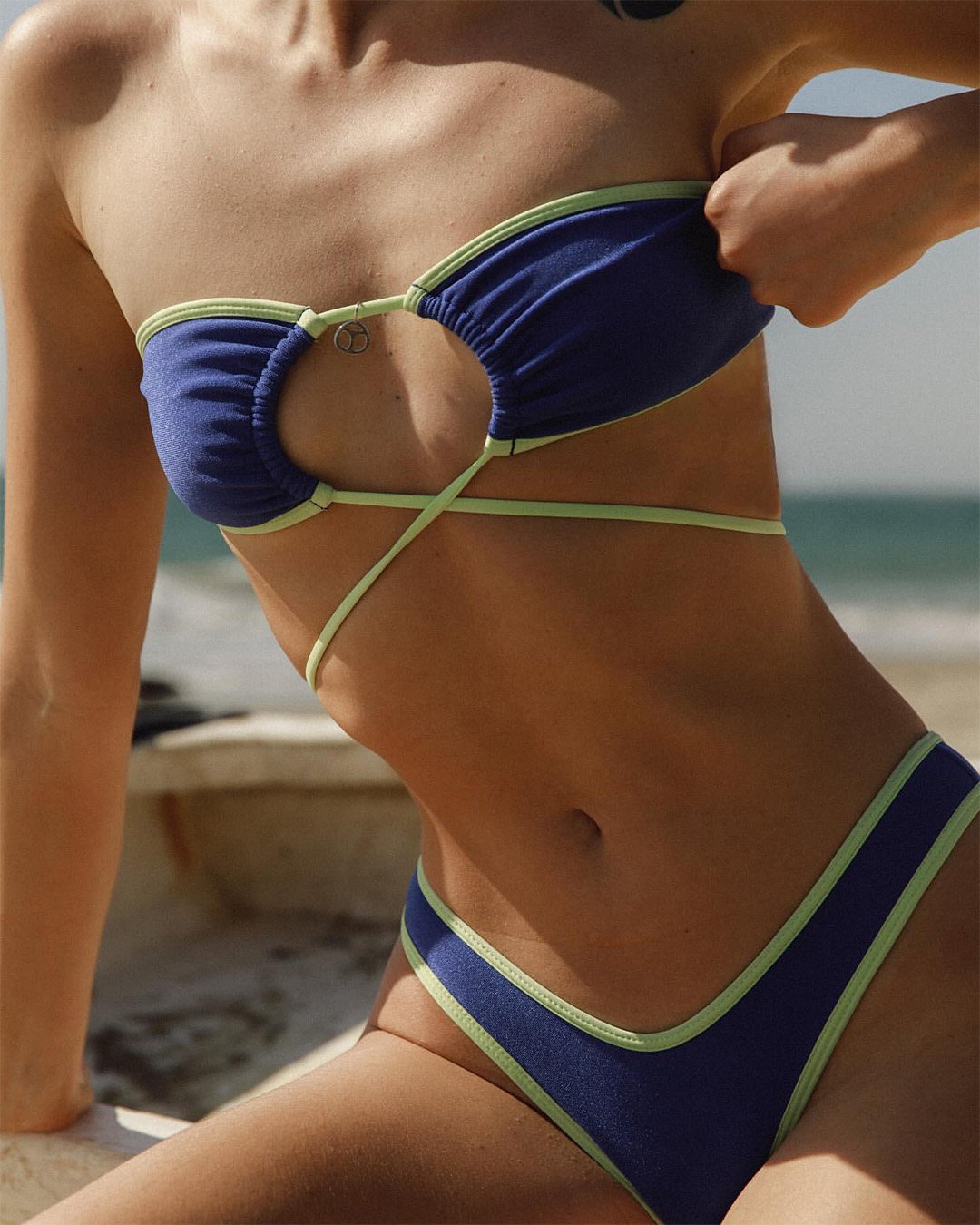

Binding is not simply a finishing technique—it can also become a visible design element.
A contrast binding can create a clear outline around a bikini and emphasize its shape.
Compared with decorative accessories, binding is integrated more directly into the garment construction, making it a practical option when a brand wants visual impact without adding additional hardware.
How Bikini Trim Changes the Same Design
For example:
Clean bikini + contrast piping
→ Minimal and sporty
Clean bikini + ruffle trim
→ Soft and feminine
Clean bikini + metal ring
→ Modern and premium
Clean bikini + bow
→ Playful and romantic
Clean bikini + shell or bead detail
→ Resort and vacation-inspiredBikini Trim vs. Bikini Construction
Some details directly affect garment construction.
For example:
Piping may be incorporated into the seam construction.
Binding affects the edge finishing and sewing process.
Hardware requires secure attachment points.
Ruffles require controlled gathering and additional sewing.
Heavy charms or chains can affect fabric tension.
Decorative elements near the bust may influence comfort and fit.This is why trim should be considered during the pattern and sample development stage, rather than added only after the main design has been finalized.
Choosing the Right Bikini Trim for Your Brand
The best trim depends on your brand positioning.
| Trim Visual Effect | Production Consideration | |
|---|---|---|
| Ruffle | Feminine & playful | Gathering and sewing |
| Bow | Romantic & youthful | Secure attachment |
| Piping | Clean & structured | Precise sewing |
| Binding | Sporty & defined | Edge construction |
| Metal hardware | Premium & modern | Material & durability |
| Beads / charms | Decorative & resort | Attachment & comfort |
| Chain | Fashion-forward | Weight & stress points |
For a startup brand, it is often better to choose one strong trim detail rather than adding multiple decorative elements to the same bikini.
A well-placed ring or contrast binding can often create a stronger design than several competing decorations.
NIX Insight: Trim Should Look Good—and Work Well
A beautiful trim is only successful when it works as part of the garment.
When developing custom swimwear, consider:
Appearance → Construction → Durability → Comfort
A trim should complement the silhouette rather than fight against it. More importantly, the attachment method needs to withstand normal wear, stretching and movement.
At NIX SWIM, we look at trim details together with fabric, pattern, sewing construction and the intended wearing experience during sample development.
Because in swimwear, the best detail is not simply the one that looks beautiful in a sketch—it is the one that still looks right after the garment is made and worn.