
Layered Bikini: The Two-in-One Swimwear Trend That Creates Twice the Impact
Some swimwear designs stand out because of a bold print. Others rely on unusual cut-outs, statement hardware, or unexpected silhouettes.
A layered bikini takes a different approach.
At first glance, it can look like two bikinis worn together.
But it’s actually one design.
By combining overlapping layers, contrasting colors, or different prints within the same garment, layered swimwear creates a two-in-one visual effect that instantly adds more depth and personality to a simple bikini silhouette.
And that’s exactly what makes it interesting.
What Is a Layered Bikini?
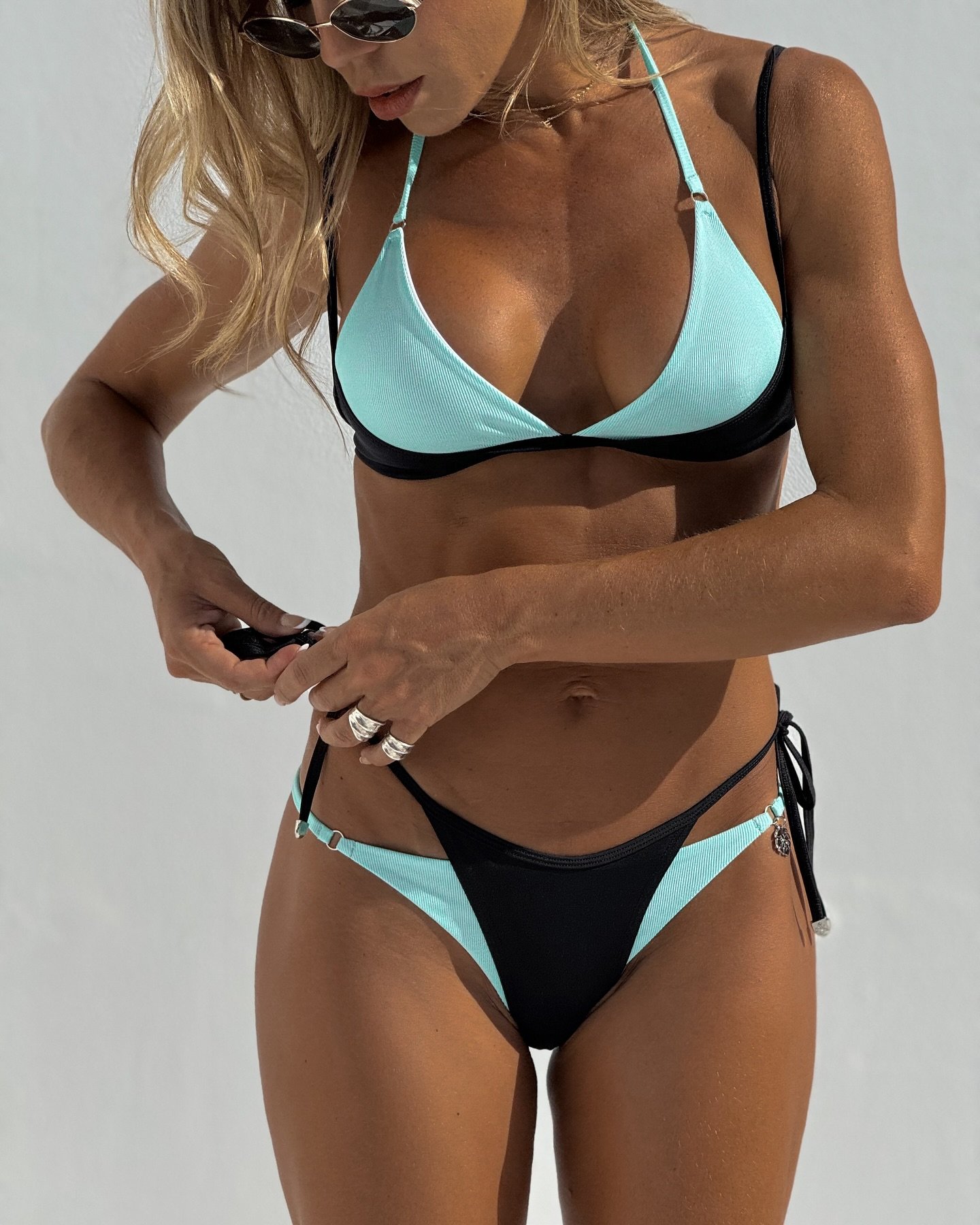
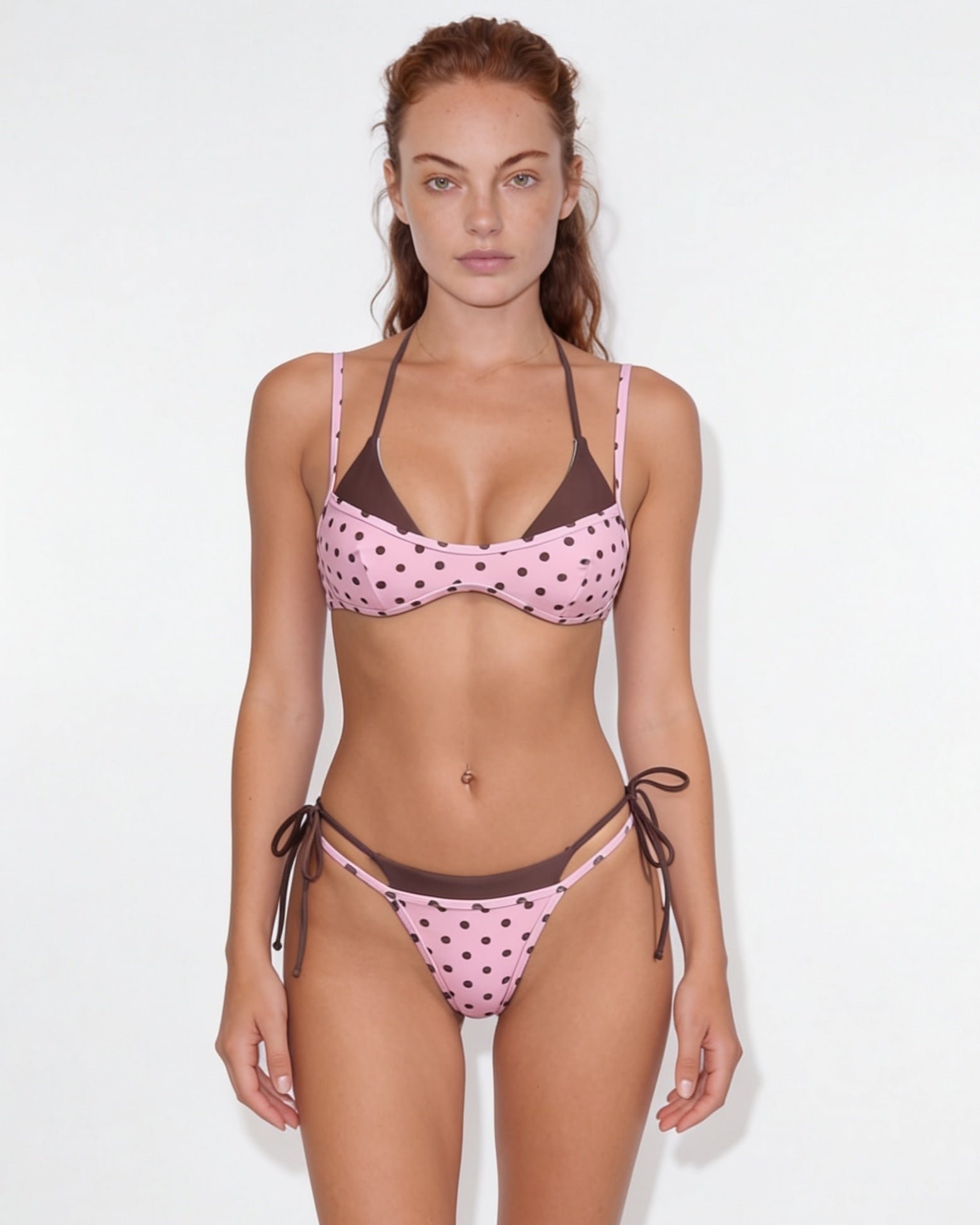
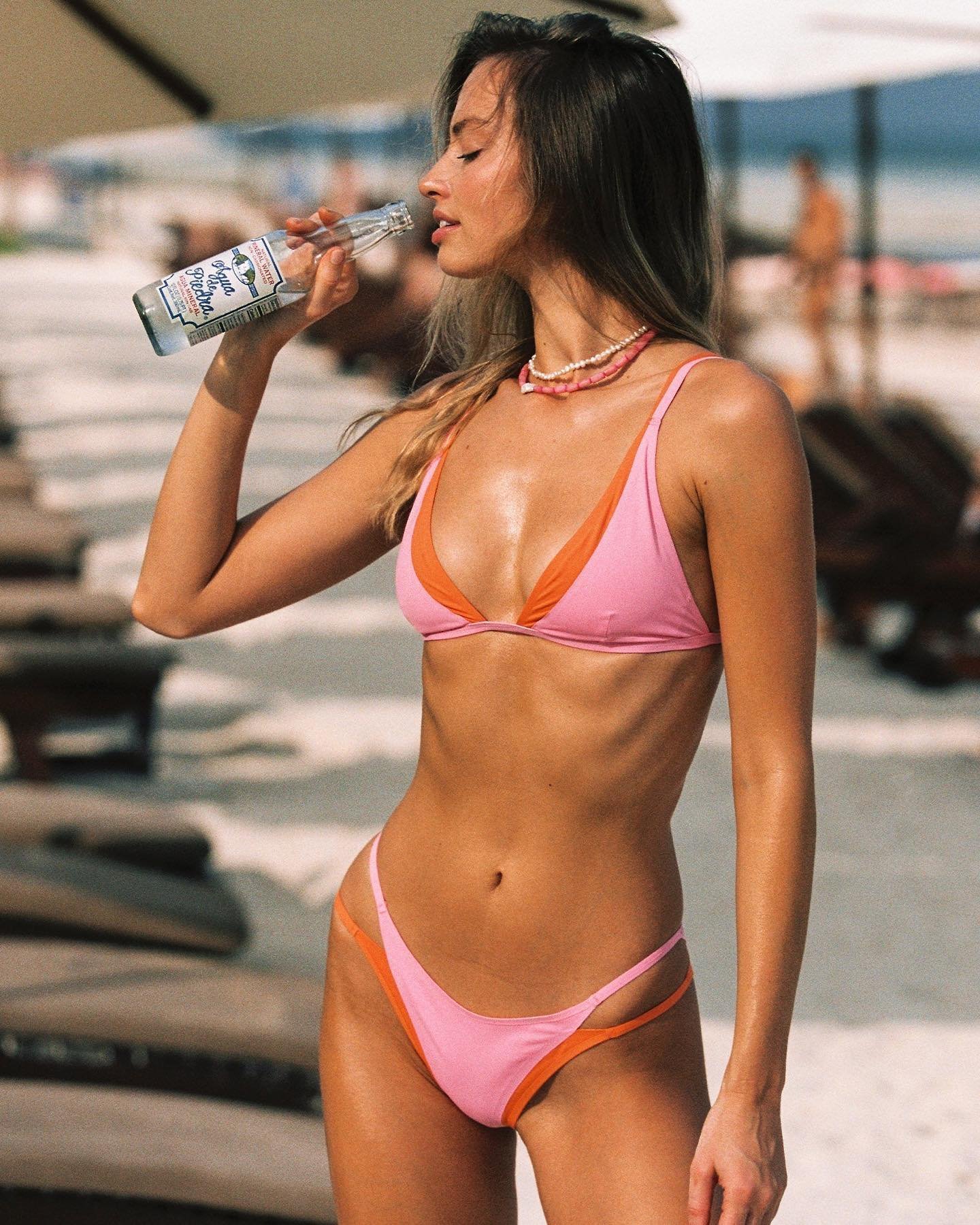
A layered bikini, also known as a double-layer bikini, uses overlapping fabric layers to create the appearance of multiple swimwear pieces.
The design may include:
- A second bikini layer underneath
- Overlapping bikini panels
- A double waistband
- Contrasting inner and outer layers
- Different colors or prints between layers
- Layered straps or ties
The goal isn’t necessarily to add more coverage.
It’s to create the visual illusion of two separate bikinis combined into one design.
One garment. Multiple layers. More visual impact.
Why Layered Swimwear Is So Eye-Catching
- It Makes a Simple Bikini Look More Complex
A basic triangle top or tie-side bottom can become much more interesting simply by adding another visible layer.
Instead of redesigning the entire silhouette, designers can create contrast through:
- Color
- Fabric layering
- Strap placement
- Overlapping edges
The result feels more detailed without necessarily becoming over-designed.
- It Creates a “Two Bikinis in One”Effect
This is probably the most interesting part of the design.
A layered bikini can make people look twice.
Is it one bikini?
Or two?
That small moment of visual confusion is actually part of its appeal.
For swimwear brands, this creates a stronger visual identity—especially in a crowded online market where products often have only a few seconds to capture attention.
- Contrast Makes the Layers Stand Out
Layering works best when the different elements create enough contrast.
For example:
Print + Solid Color
A bold printed bikini can sit underneath a clean solid-colored layer.
Color + Color
Two contrasting colors can create a sporty or playful effect.
Dark + Light
A darker inner layer combined with a lighter outer layer can make the overlapping construction more visible.
Pattern + Pattern
Two coordinated prints can create a more fashion-forward design.
The key is making sure the layers feel intentional—not random.
The Details That Make a Layered Bikini Work
Sporty swimwear works particularly well with strong color combinations.
Black + White
Clean and timeless.
Navy + Cream
Sporty with a more sophisticated feel.
Pink + Red
Bold and youthful.
Blue + Green
Fresh and energetic.
Neutral + Contrast Trim
Minimal but still visually interesting.
A simple change in binding, piping, straps, or color-blocking can make the same basic silhouette look completely different.
Sporty Doesn't Mean Basic
Layered swimwear may look simple, but the construction requires careful planning.
Layer Placement
The second layer needs to be visible enough to create the intended effect without adding unnecessary bulk.
The placement of the layers can completely change the look of the design.
For example:
- A visible underlayer at the neckline
- A second waistband sitting underneath the main bikini bottom
- Contrasting straps crossing behind the shoulders
- Layered side ties
Small changes can create very different visual results.
Fabric Compatibility
When two fabrics are layered together, they need to behave well together.
Different fabrics may have different:
- Stretch levels
- Recovery
- Weight
- Thickness
- Surface texture
If one layer stretches more than the other, the garment may twist, shift, or lose its intended shape.
For this reason, fabric selection should be considered early in the development process.
Avoiding Unnecessary Bulk
More layers don’t always mean a better result.
One of the biggest challenges in layered swimwear is creating visual depth without making the garment feel heavy.
The construction needs to balance:
Design effect + Comfort + Fit + Stretch
A good layered bikini should look detailed while still feeling like swimwear.
Keeping the Layers in Place
Because multiple layers are visible, they also need to stay where they are supposed to.
Depending on the design, manufacturers may need to carefully consider:
- Connection points
- Elastic placement
- Seam construction
- Strap tension
- Layer positioning
Otherwise, the two layers may move independently and change the intended look during wear.
Layered Bikini Design Ideas
One of the biggest advantages of this design concept is flexibility.
The same idea can be applied in many different ways.
- Double-Layer Bikini Top
A visible triangle or bralette layer sits underneath the main bikini top.
This creates depth around the neckline and bust area.
Example:
Baby Blue Triangle Layer + Yellow Polka Dot Bikini
- Double-Waist Bikini Bottom
A second waistband sits underneath or overlaps the main bikini bottom.
This is one of the easiest ways to create a strong layered effect.
Example:
Blue Tie-Side Layer + Printed Bikini Bottom
- Layered Straps
Different straps appear to belong to separate bikini pieces.
This can create a playful and slightly deconstructed look.
- Print + Solid Layering
One of the most versatile options.
A solid-colored layer can frame or highlight a printed bikini underneath.
This works particularly well when brands want to combine a signature print with one of their core colors.
- Asymmetric Layering
The layers don’t need to be perfectly symmetrical.
An asymmetric neckline, overlapping strap, or offset waistband can create a more fashion-forward interpretation of layered swimwear.
One Bikini Silhouette, More Design Possibilities
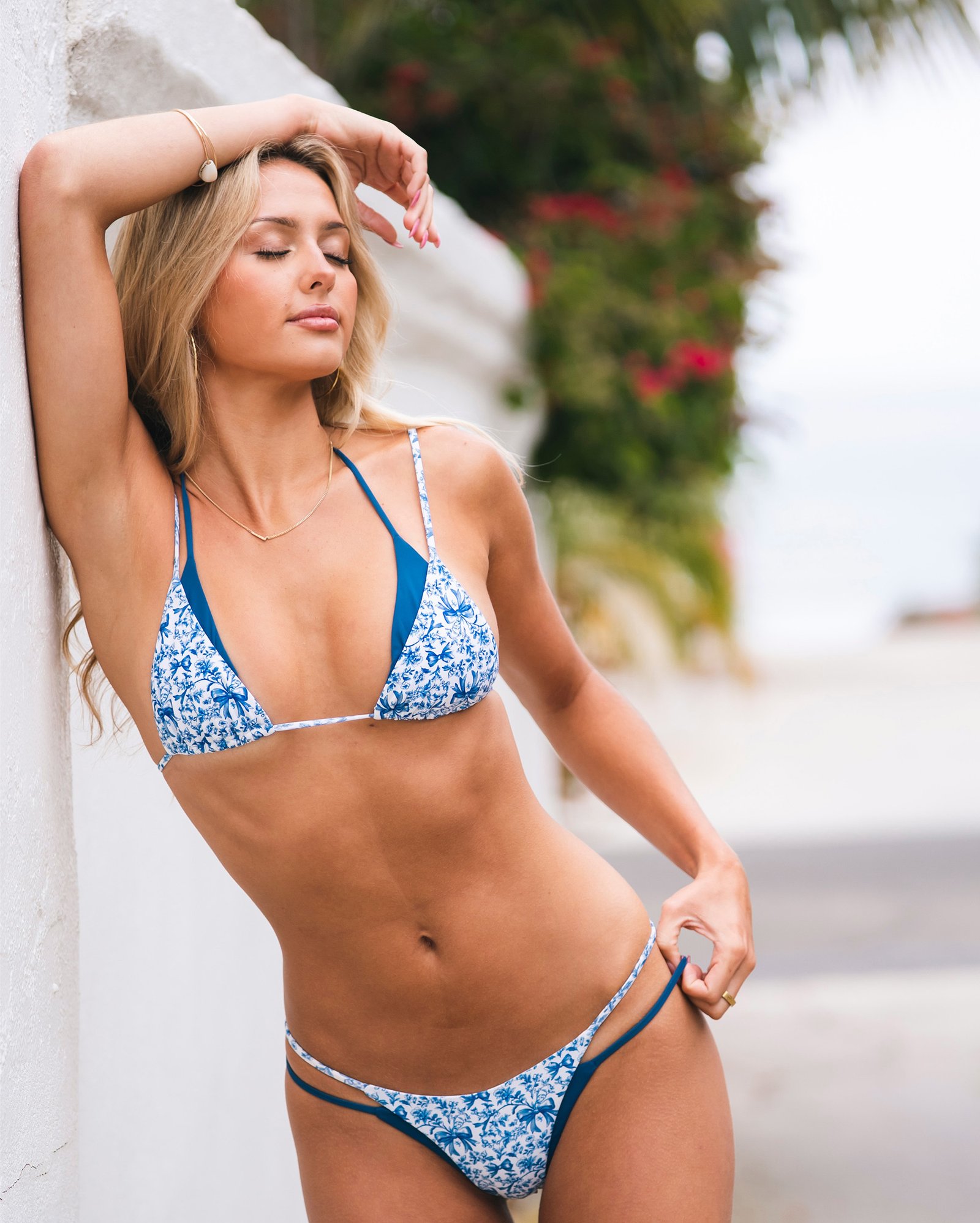
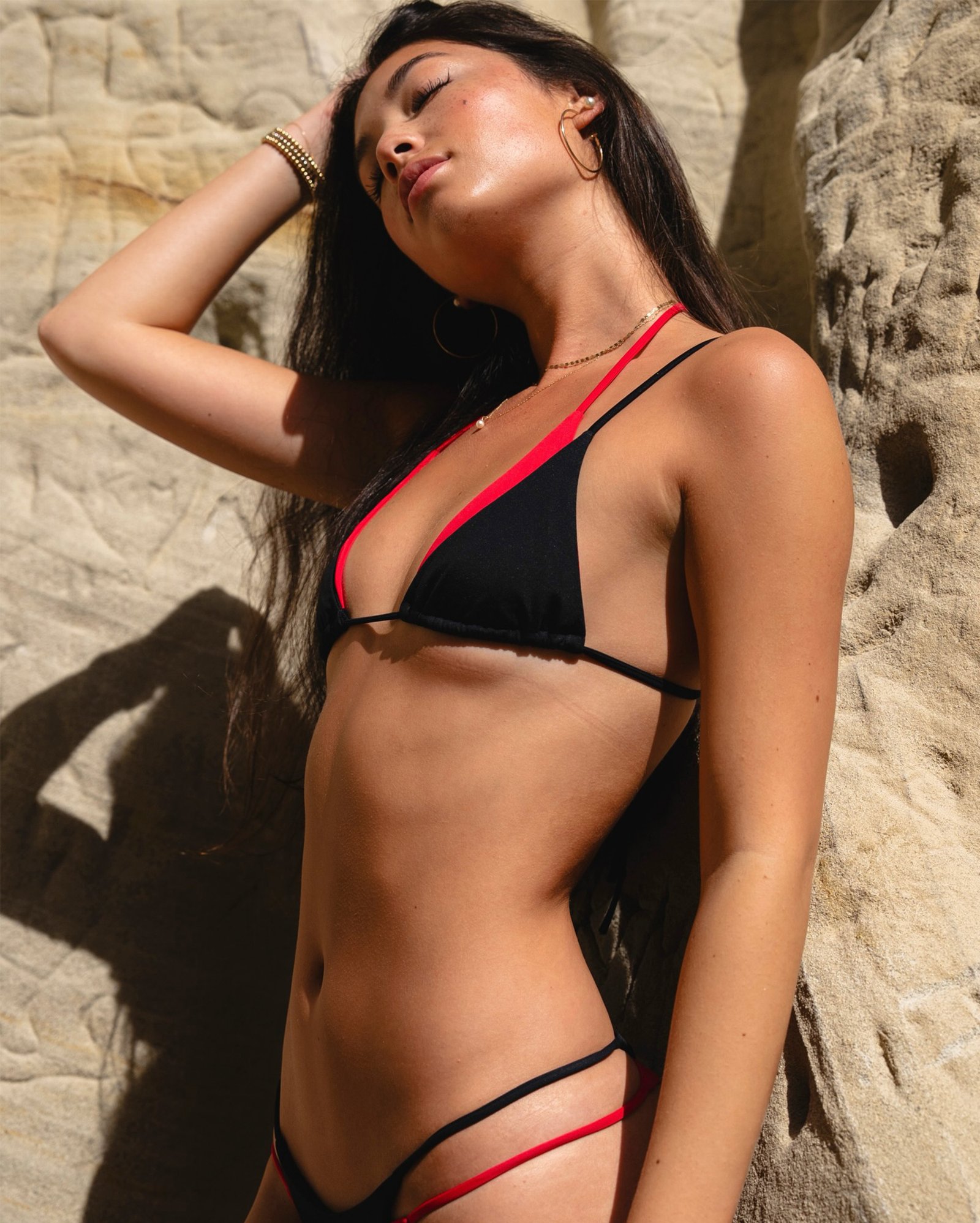
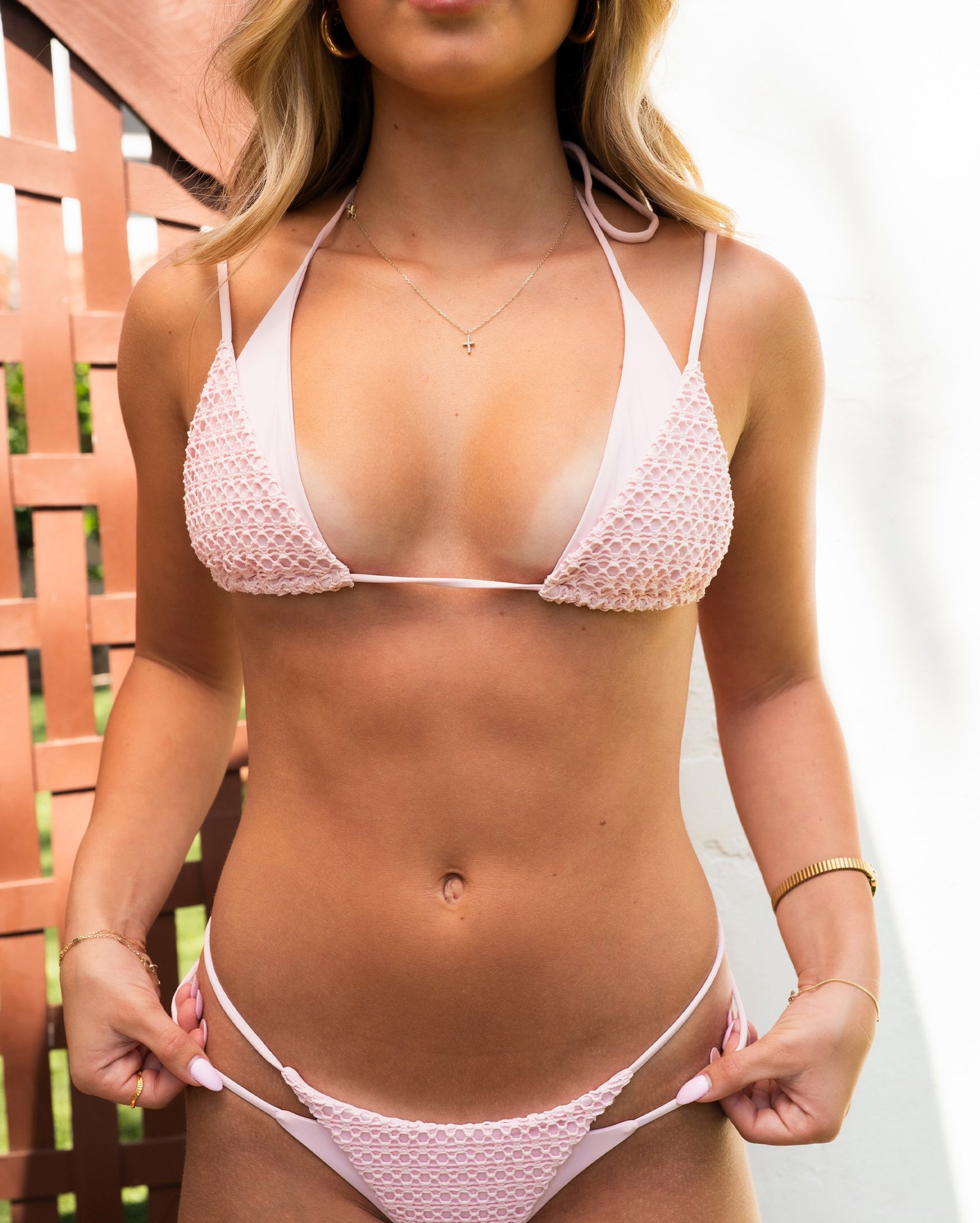


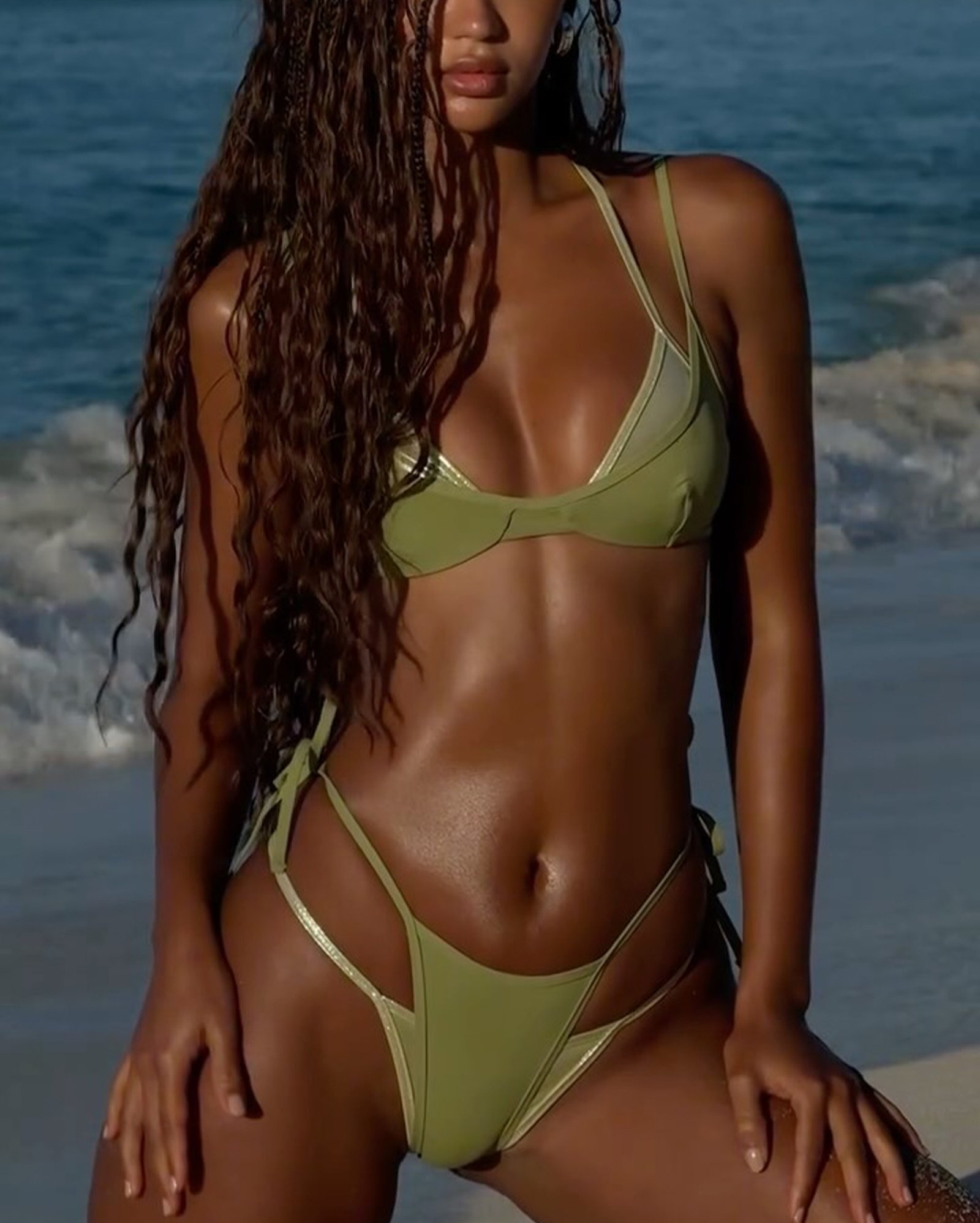
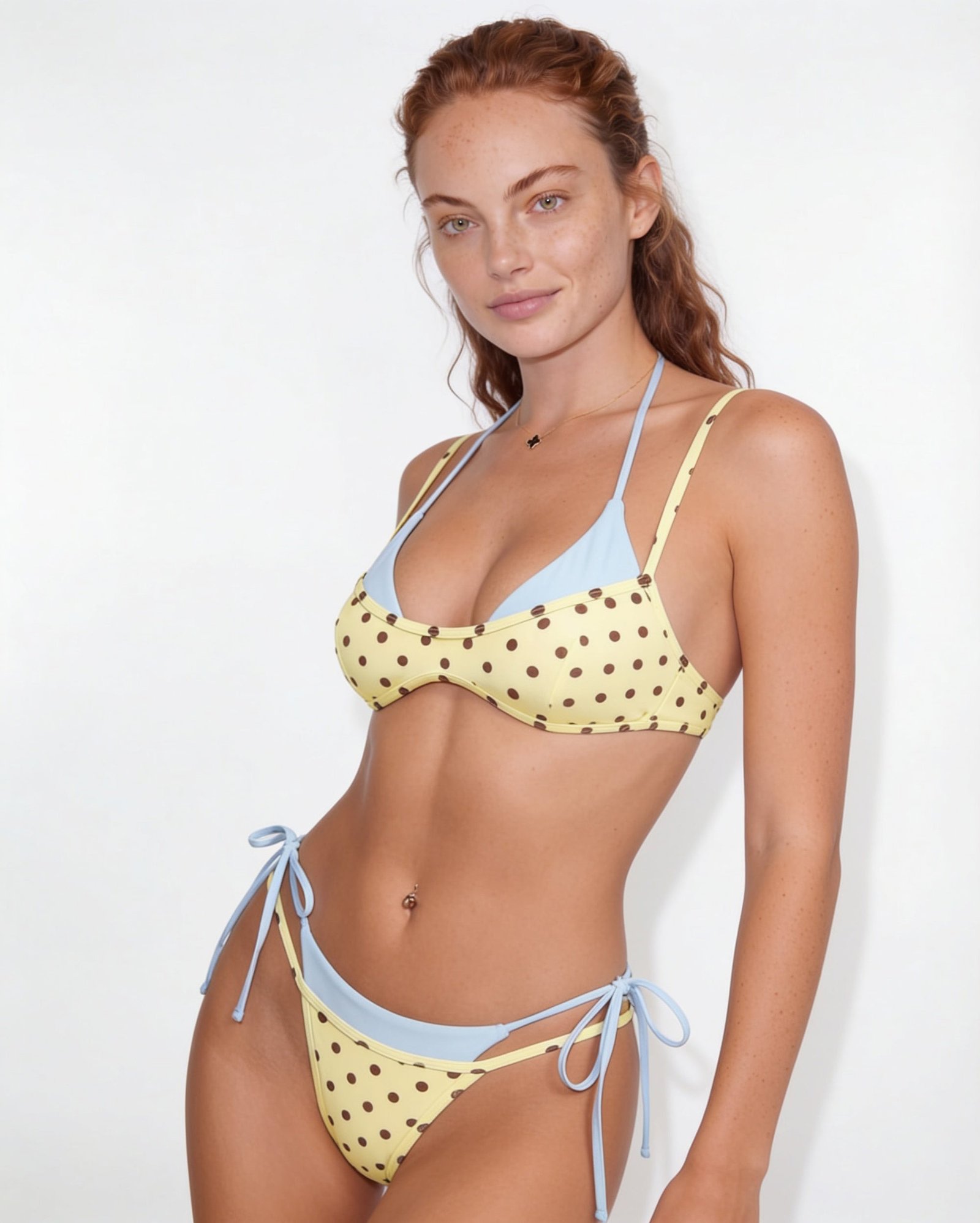
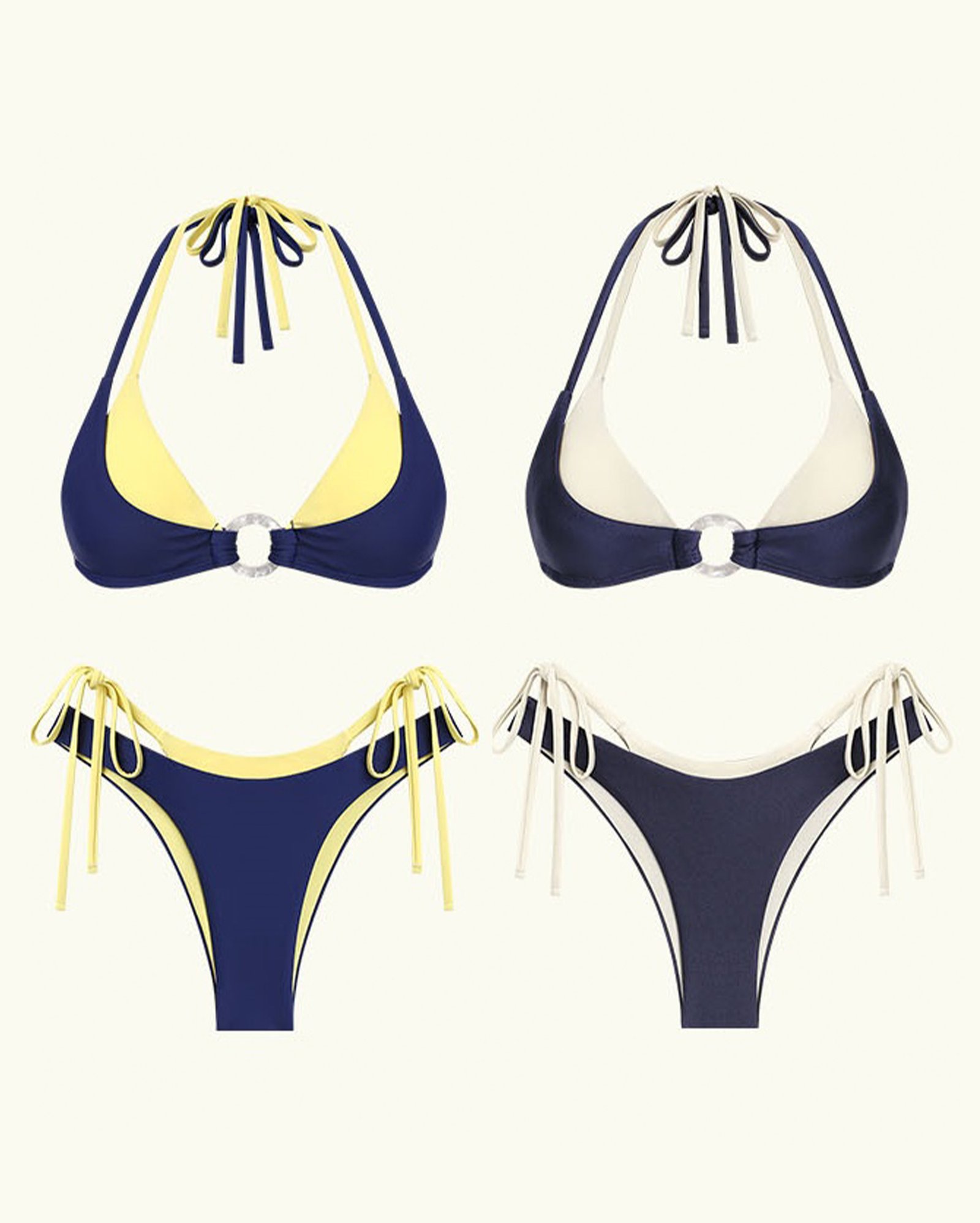
Layering is especially interesting because it can transform an existing silhouette.
The same basic bikini can be developed into multiple versions simply by changing:
- The visible underlayer
- Color combinations
- Prints
- Strap placement
- Waistband construction
- Layer proportions
This can help brands create a cohesive collection without developing completely different silhouettes for every style.
For example:
One Triangle Bikini Pattern
↓
Print + Solid Layer
↓
Neutral + Neutral Layer
↓
Bright + Bright Layer
↓
Sporty Contrast Layer
The base silhouette stays recognizable, while the visual identity changes.
What Brands Should Consider Before Developing a Layered Bikini
Before moving into sampling, it’s worth thinking beyond the visual concept.
Will the two layers use the same fabric?
Using compatible fabrics can help maintain consistent stretch and recovery.
How will the layers be connected?
The construction needs to keep the layers aligned while allowing the garment to stretch naturally.
Will the additional layer affect fit?
Extra fabric and seams can influence how the bikini sits on the body.
Does the design add unnecessary bulk?
The layered effect should feel intentional without making the product heavier or less comfortable.
How will the colors and prints work together?
Because both layers are visible, they need to be treated as one complete design.
Why Sampling Matters for Layered Swimwear
A layered bikini is a good example of why a sketch doesn’t always tell the whole story.
On paper, two overlapping layers may look perfectly balanced.
But once developed into a physical sample, questions quickly appear:
- Is the second layer visible enough?
- Does it stay in position?
- Is the garment still comfortable?
- Does the extra layer affect stretch?
- Do the colors work as expected?
- Does the design look intentional from different angles?
Sampling allows brands to adjust these details before moving into production.
Sometimes, moving a layer by just a few centimeters can completely change the final effect.
The Manufacturing Challenge Behind the “Two Bikinis” Look
The goal of layered swimwear is simple:
Make it look like two bikinis without making it feel like two bikinis.
That requires a balance between design and construction.
The final product needs to maintain:
- Comfortable stretch
- Clean construction
- Stable layer positioning
- Consistent fit
- Durable seams
- A visually balanced design
This is why layered swimwear should be considered as more than a styling detail.
It’s a product development challenge.
And when done well, that’s exactly what makes it interesting.
Final Thoughts
Layered bikinis prove that you don’t always need a completely new silhouette to create something visually different.
Sometimes, adding one carefully placed layer is enough.
By combining colors, prints, straps, and overlapping construction, a simple bikini can take on a completely new identity.
The result is a design that feels playful, unexpected, and visually more complex—while still remaining wearable.
And perhaps that’s the real appeal of layered swimwear.
It looks like more. Without necessarily becoming more complicated.
- FAQ -
What is a layered bikini?
A layered bikini uses overlapping fabric layers or contrasting elements to create the appearance of two swimwear pieces in one design.
Is a layered bikini the same as a double-layer bikini?
Generally, yes. “Layered bikini” describes the visual style, while “double-layer bikini” more specifically refers to the two-layer construction.
Does layered swimwear use more fabric?
Depending on the construction, some designs may require additional fabric or components.
Can different colors or prints be used?
Yes. Print-and-solid or contrasting color combinations are commonly used to make the layered effect more visible.
Is layered swimwear more difficult to manufacture?
It can be. The layers need to maintain proper stretch, positioning, comfort, and fit.